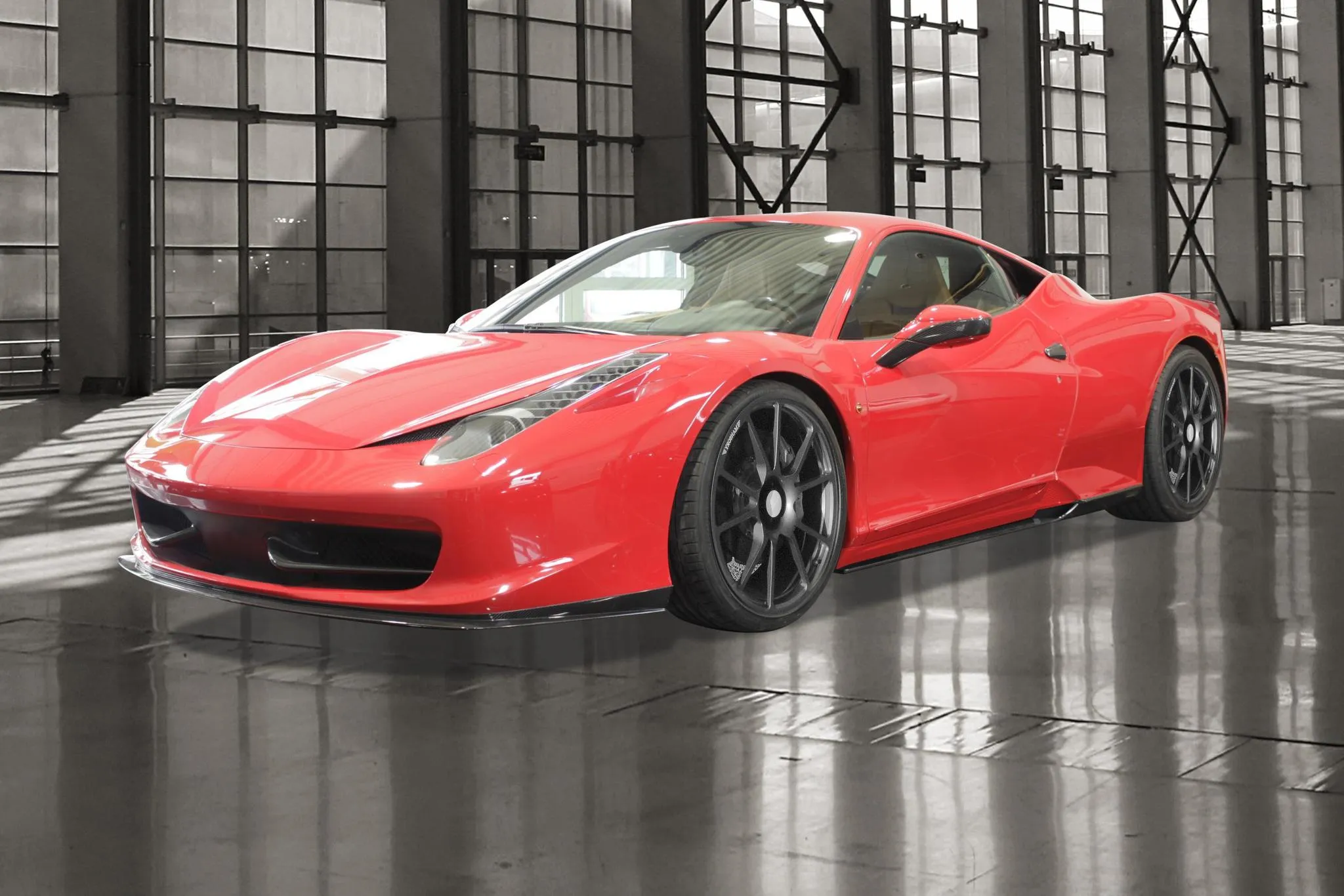
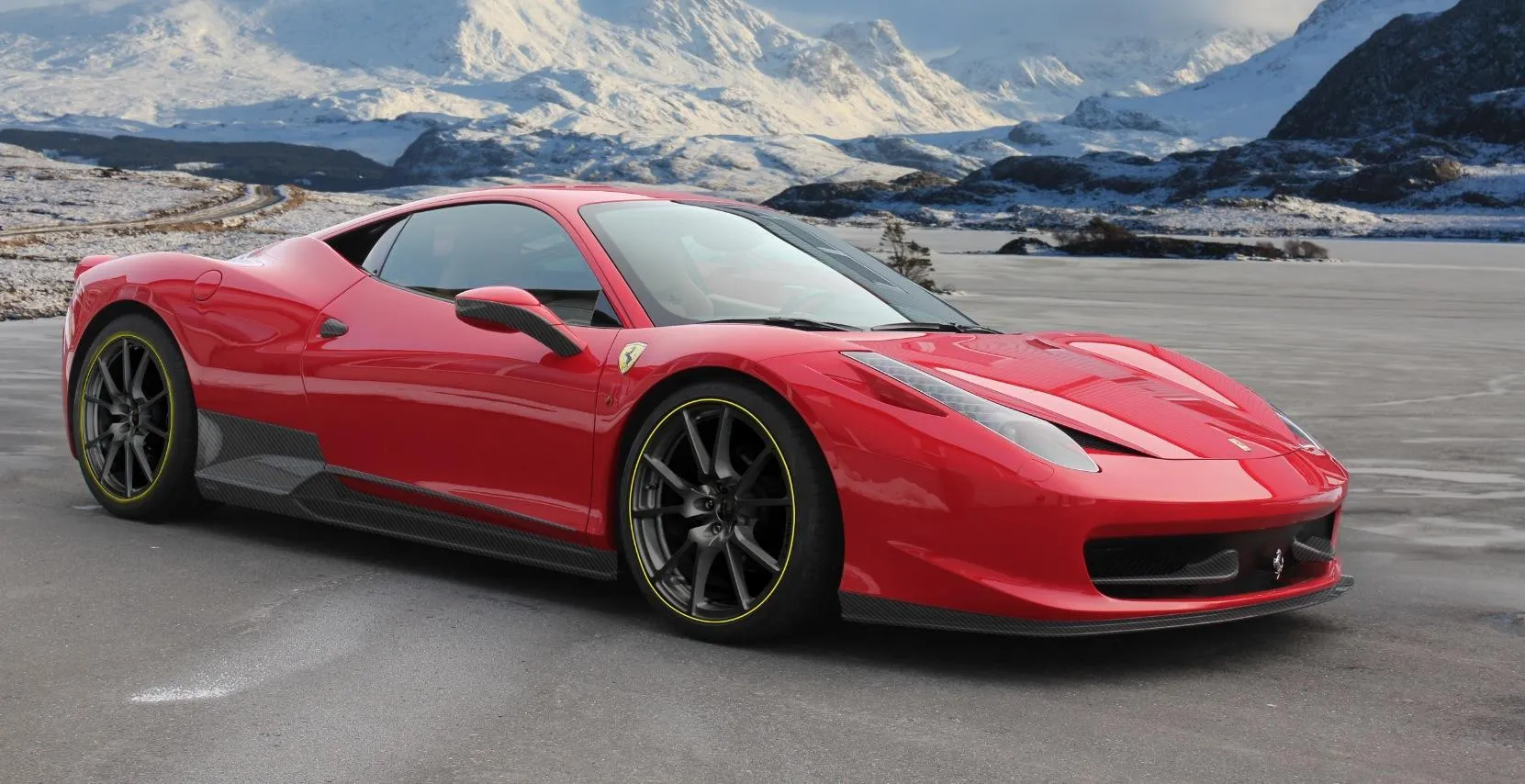
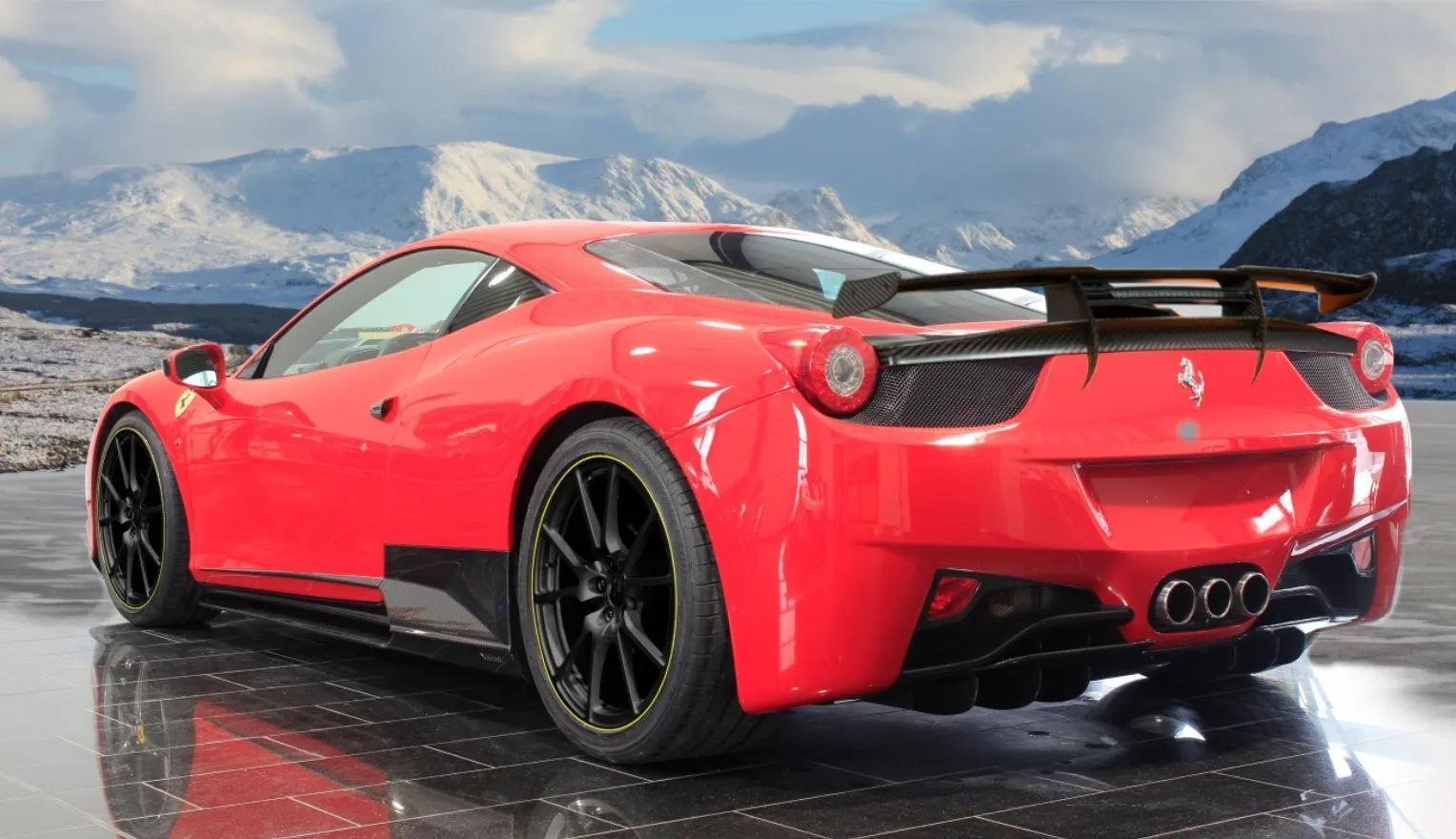
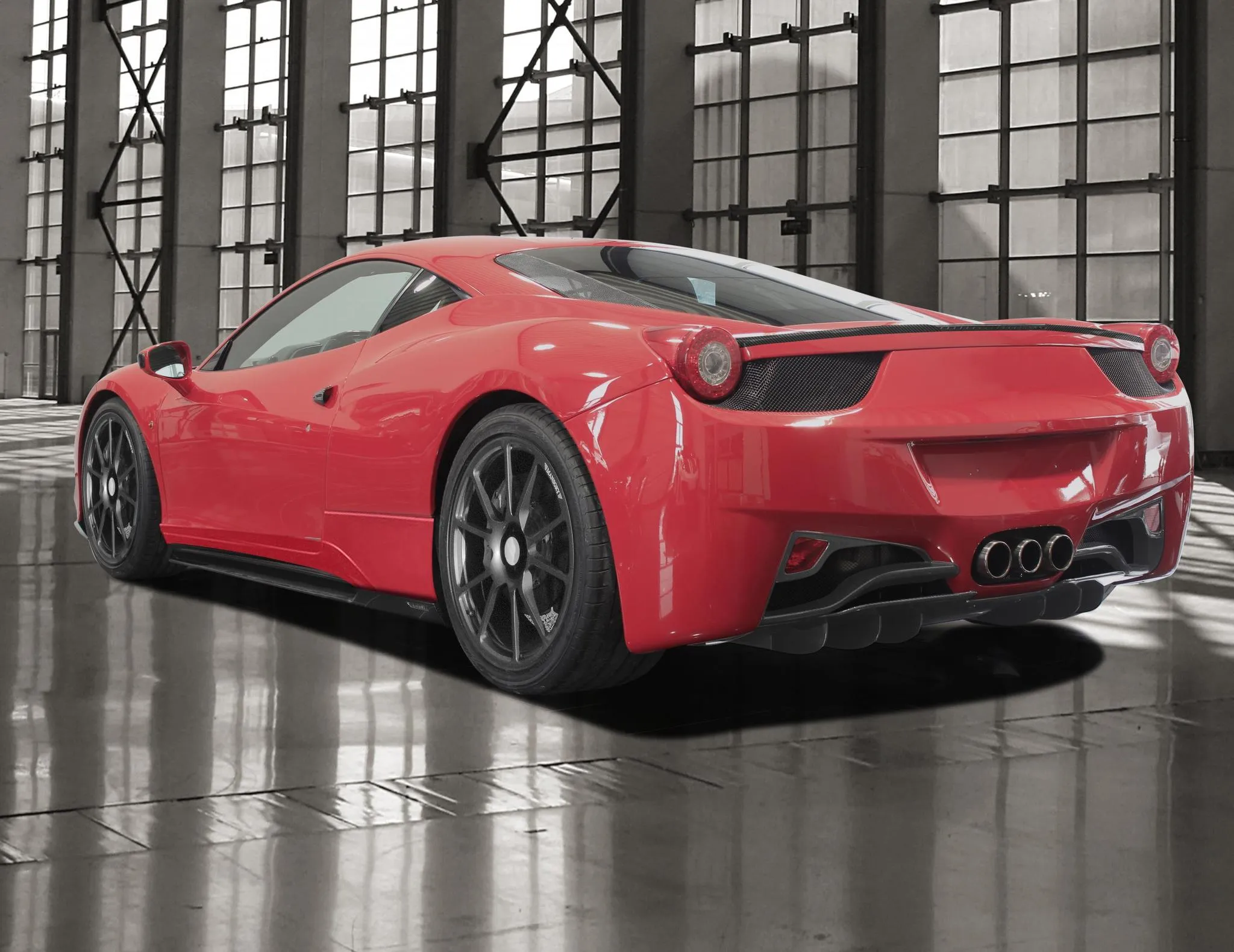
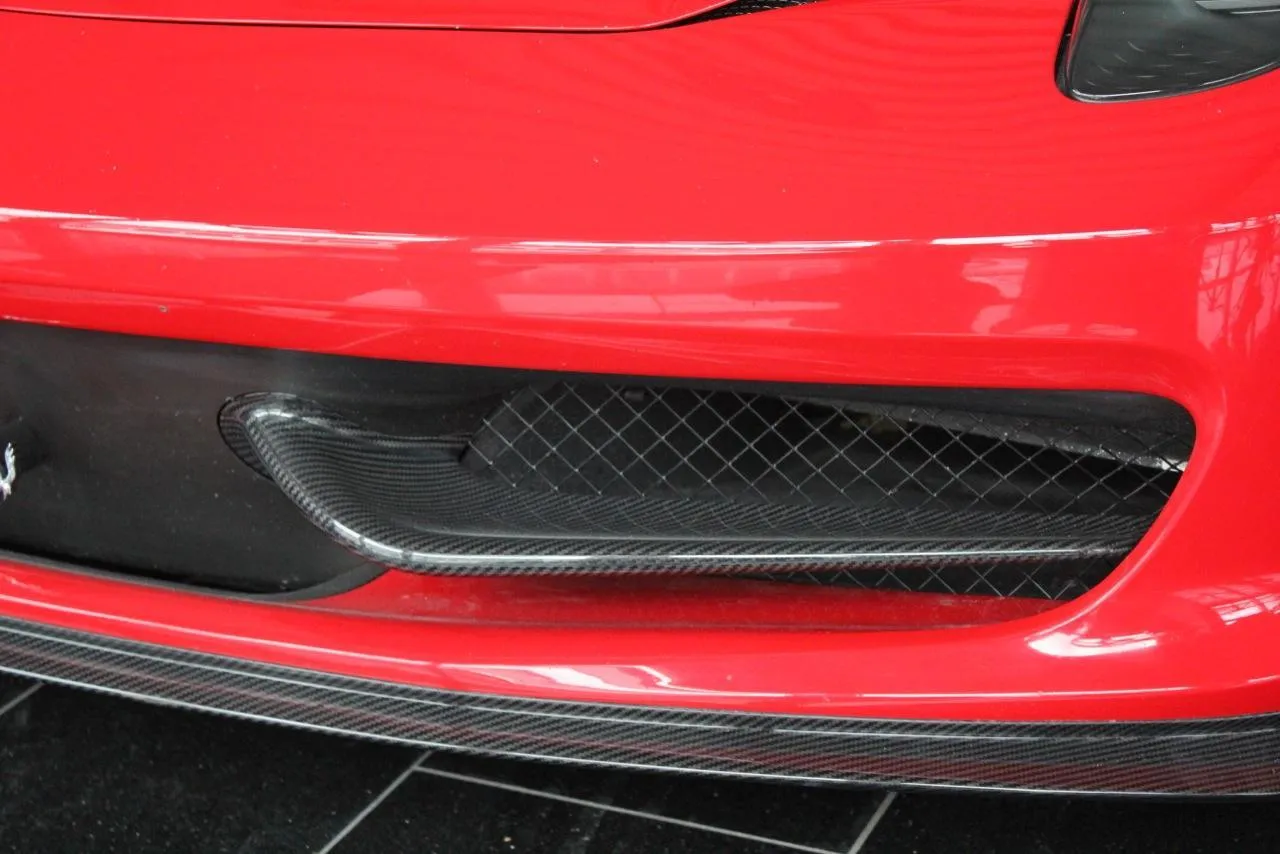
Mansory Carbon Fiber Body kit set for Ferrari 458 Italia


Mansory Siracusa — the carbon programme for Maranello's last naturally aspirated mid-V8
The Ferrari 458 Italia closed a chapter that Maranello has not reopened: a flat-plane, naturally aspirated 4.5-litre V8 sitting amidships, screaming to 9,000 rpm and making 562 horsepower without a single turbocharger in the airbox. When the 488 GTB arrived in 2015 it brought twin scrolls and a different kind of voice; the 458 became, almost overnight, the last of its kind. Mansory's Siracusa programme — released in 2011, refined across the model's life — is the carbon-fibre conversion that grew up alongside that car. Today the conversation around a 458 is no longer about how to make it faster. It is about how to keep it, dress it correctly, and let the engine speak. Siracusa is the answer to that brief.
Why a 458 Italia still earns this in 2026
Used 458 Italia values bottomed out somewhere around 2020 and have been climbing every year since. Auction houses now list clean coupes alongside the 360 Challenge Stradale and the 430 Scuderia in their future-classic columns, and well-kept Speciales already trade well above their original sticker. The argument is simple: this is the last mid-engined Ferrari V8 you can buy that breathes through nothing but a throttle butterfly. Every successor — 488, F8, 296 — adds forced induction or a hybrid layer. There is no road back to 9,000 rpm without electric assistance. That makes the 458 less of a used supercar and more of a horological object: a mechanism that will only become rarer.
Treating the car that way changes how an owner thinks about a Mansory commission. A Siracusa build in 2011 was a statement of taste against a still-current showroom car. A Siracusa build in 2026 is a preservation choice — a way to give a car you intend to keep for decades a coordinated carbon body that was designed for it specifically, not a generic aero kit. The panels were drawn against the 458's actual surface geometry, the rear wing was shaped against the standard car's high-speed rear lift, and the M9 wheel package was built to the original track and brake clearances. The work is reversible: the original Ferrari panels come off, the carbon goes on, and the OEM bodywork can be put back on if the car ever moves to a different owner with a different vision.
The other thing the 458 still earns, in 2026, is a coordinated visual upgrade. Stock 458 Italia bodywork is good, but it was designed in the late-2000s aesthetic — softer, rounder, less aggressive than what Mansory's later 488 and 812 work would establish. Siracusa pulls the car forward without breaking its lineage. The front grew teeth, the rear gained shoulder, and the bonnet gained the vented relief that the V8 always wanted underneath it. None of it shouts. All of it reads.
Siracusa parts inventory and weave grade
The Siracusa conversion is supplied as a complete carbon programme rather than a loose parts list. Every panel is autoclave-cured prepreg carbon fibre with hidden FRP reinforcement at the mounting points, finished by default in clear-coat gloss with the weave deliberately visible. Matte clear, painted body-colour and stealth-primer finishes are available on request. The full kit includes:
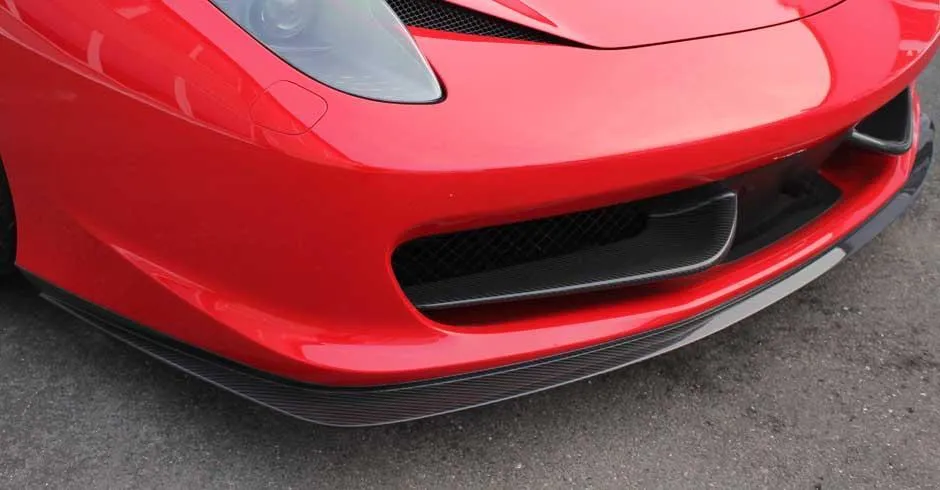
- Front bumper — replaces the OEM nose end-to-end with a re-drawn lower lip, larger central intake and integrated brake-cooling ducts feeding the front discs.
- Bonnet with vents — the carbon front bonnet carries twin extraction louvres that release heat from the front radiator pack and shave a meaningful amount of mass off the OEM aluminium panel.
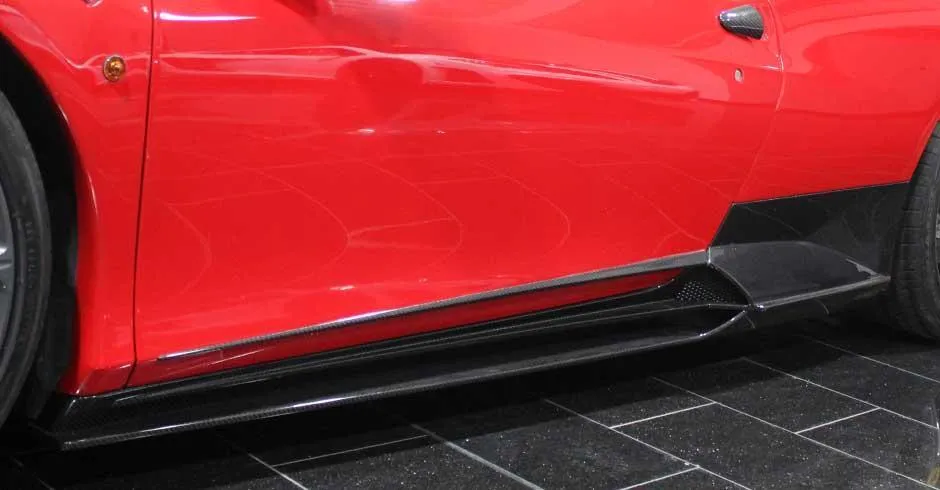
- Side skirts — left and right, sculpted to extend the lower line forward into the front bumper and rearward into the rear lower corners.
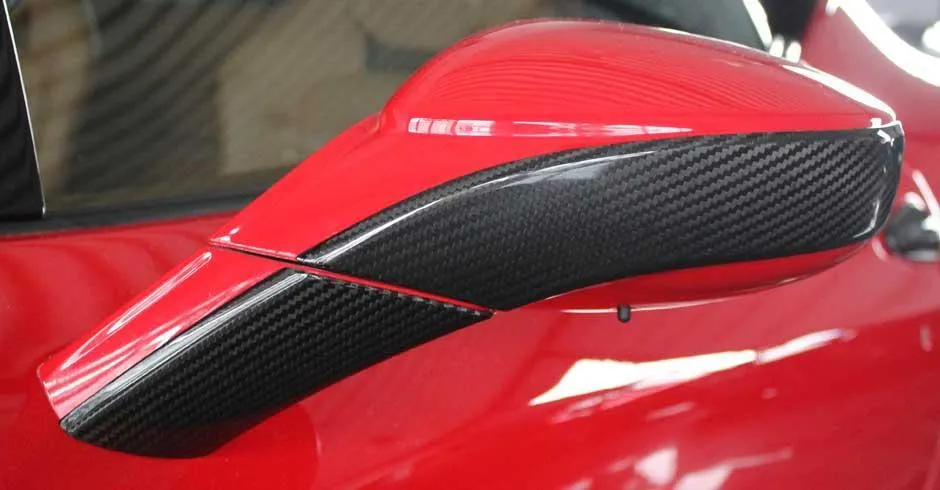
- Mirror caps — full carbon shells in the same weave as the body, replacing the painted OEM housings.
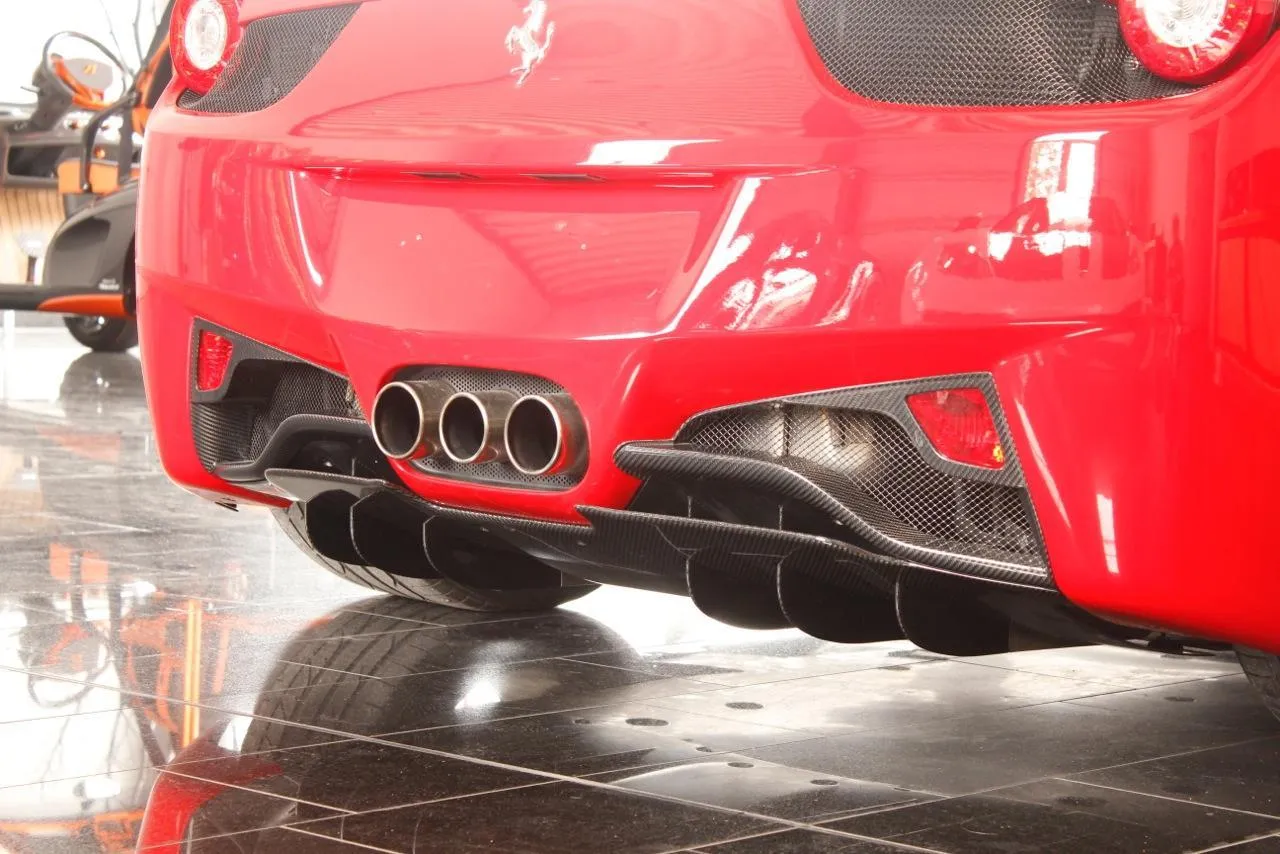
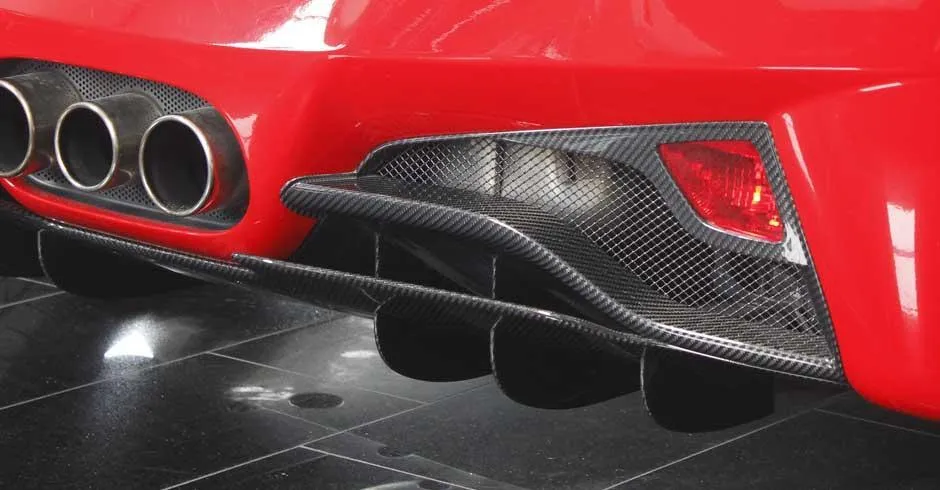
- Rear bumper — re-shaped lower section with integrated diffuser fences flanking the OEM tailpipe outlets.
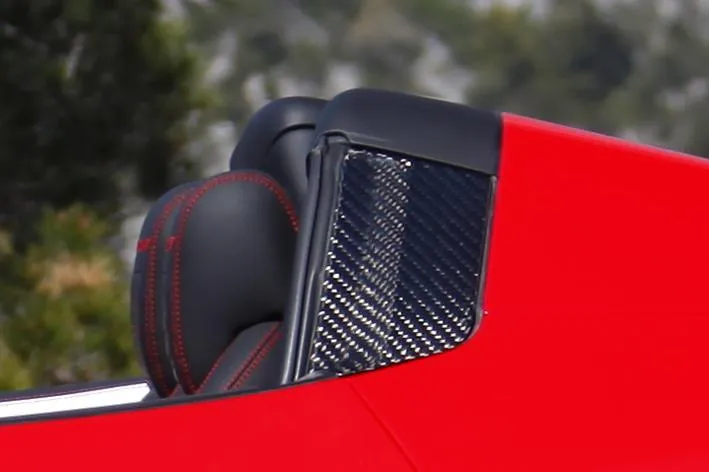
- Rear engine cover — visible-carbon panel over the engine bay, opened up to expose the V8 plenum behind the rear glass.
- Rear wing — fixed-mount aerofoil tuned against the 458's high-speed lift profile, sitting clear of the rear deck rather than spoiler-style on it.
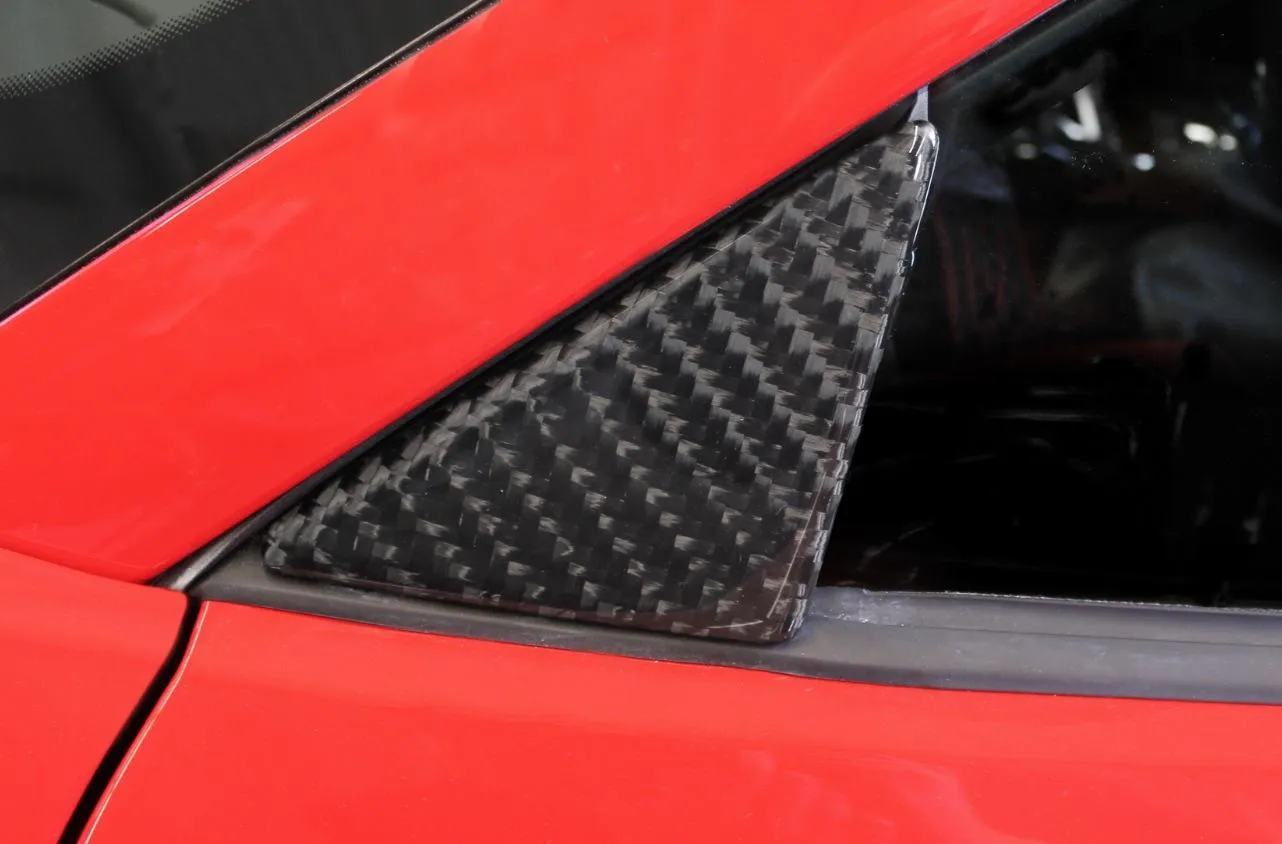
- Side air-intake inserts — carbon trim around the OEM rear-quarter intakes, framing the airflow to the engine bay.
- Front splitter detail — separate lip element that bolts under the new front bumper for owners who want the deepest front profile.
The weave grade matters. Mansory's house specification for Siracusa is autoclaved twill prepreg with the visible face oriented for symmetric pattern across the centreline of every panel. Reinforcement layers and bonding flanges are FRP — not carbon — because they sit hidden under the body and do not benefit from the cost or weight properties of show-grade fibre. For background reading on how Mansory specifies, finishes and maintains carbon-fibre bodywork, the Mansory carbon fibre materials and care guide covers the topic in detail.
Naturally aspirated context — what the kit doesn't change
It is worth being explicit about what Siracusa is, and what it is not. The programme is a body and visual package. It does not touch the 4.5-litre F136 V8, it does not alter the seven-speed dual-clutch gearbox, and it does not modify the suspension or brakes beyond what is required to clear the M9 wheel-and-tyre fitment. Every horsepower the car produced when it left Maranello is still there after the install — and, in the case of a 458 Italia in 2026, that is the entire point.
Owners occasionally ask whether Mansory offers a power upgrade to combine with the carbon body. For the 458 Italia specifically, our answer is to leave the engine alone. The factory mapping was developed against a high-revving naturally aspirated combustion cycle that does not respond well to ECU-only tuning, and any meaningful gain requires intake, exhaust and ECU work that compromises the originality argument that makes the car valuable in the first place. A Siracusa-bodied 458 Italia with a documented stock drivetrain and full Ferrari service history is, today, more interesting to a collector than the same car with bolted-on power claims. If the brief is a louder voice, a high-flow exhaust system from one of the established Italian specialists is the polite answer; if the brief is more power, the conversation belongs on the 488 or F8 platforms, not on this one.
The body kit is mass-aware as well. Carbon fibre panels weigh meaningfully less than the original aluminium and composite bodywork, and the vented bonnet improves under-bonnet thermal management at sustained pace. None of that turns the 458 into a different car — it simply lets the car the factory built breathe a little more freely.
Wheel pairing — M9 21-inch
Siracusa was specified around Mansory's M9 forged wheel in 21-inch diameter, front and rear, in a multi-spoke pattern that echoes the radial geometry of the 458's standard alloy without copying it. Forged construction lets the wheel sit lighter than the OEM cast item even at the larger diameter, and the offset values are mapped to the original Ferrari hub centres so brake clearance and suspension geometry are preserved. Standard finishes are gloss black, satin black, polished silver and matte gunmetal; brushed bronze, anthracite and full custom colours are available against an extended lead time. The full Mansory and partner-forged catalogue, including alternative wheel families that pair with Siracusa bodywork, lives in the Hodoor forged wheels collection. We can ship the wheels with the body kit as a single bonded shipment so customs clears once and the car comes off the trailer ready for one consolidated install.
Cities where Siracusa commissions land
Three cities account for most of the Siracusa volume Hodoor handles. Monaco is where collectors keep their 458s alongside other future-classic Ferraris in climate-controlled garages and want the carbon body installed without the car ever leaving the principality, which is why we work with two trusted body shops on the Roquebrune side that handle full-discretion installs. Dubai brings owners who already moved on from a 488 Pista or an F8 Tributo and went back to a 458 Italia precisely because the V8 sounds the way it sounds, and they want a Siracusa commission that travels with them through the Gulf summer without paint-prep complications. Hong Kong has a smaller but unusually loyal 458 ownership cluster — buyers who treat the car as a long-hold asset and commission Siracusa as part of a documented restoration package, often alongside a paint protection film respray and a full mechanical recheck.
To open a Siracusa commission for your 458 Italia, send us the VIN and current condition photographs by email at [email protected] or message us on WhatsApp at +44 7488 818747. We will come back with a parts schedule, a finish proposal, an M9 wheel quote and a landed price for your destination, including installation routing if you want us to handle the body shop end-to-end. For a wider perspective on how Siracusa fits into the rest of the catalogue, the Mansory body kits complete guide walks through every active programme by chassis.
Questions that come up
Does Siracusa fit the 458 Spider as well as the 458 Italia?
The programme was drawn against the Italia coupe body. The front bumper, bonnet, side skirts, mirror caps and rear bumper transfer cleanly to a 458 Spider; the rear engine cover and rear wing change because the Spider has a folding hardtop and a different rear deck. We confirm the exact panel list against your VIN before quoting.
Will a Siracusa build affect the car's collector value?
Reversibility is the key. Because the kit bolts on without permanent body modifications, the original Ferrari panels can be retained and reinstalled before any future sale. We recommend storing the OEM bumpers, bonnet and mirror caps with the car. Most collectors who go through Hodoor keep both sets and pass them on together at sale time.
How long does the install take?
Plan for one full working week at a competent body shop, plus paint or finish work if the panels are being colour-matched rather than left in visible carbon. The kit ships pre-fitted and trial-assembled at our facility, so the installer's role is alignment and final mounting rather than primary fitment trial.
Is the carbon weave UV-stable in hot climates?
Yes, the autoclaved prepreg layup with UV-stable clear coat is rated for sustained outdoor exposure in high-UV environments. Owners in the Gulf region typically add a paint protection film overlay on top of the clear coat for a second barrier, particularly on the bonnet and front bumper.
Can I order a single panel rather than the full kit?
Yes — the front bumper, bonnet, rear wing, side skirts, mirror caps and rear engine cover are all available as standalone parts. Many owners start with the bonnet and rear wing, see how the car reads with those changes, and complete the programme over the following months.
What does shipping look like outside Europe?
The full Siracusa programme ships in two crated assemblies plus a wheel crate. We handle insured door-to-door logistics with full customs paperwork. Lead time for a complete kit and wheel set is typically 6 to 8 weeks from confirmed deposit, depending on finish specification.
Geographic spread of Siracusa For Ferrari 458 Italia commissions
Order traffic for the Mansory Siracusa For Ferrari 458 Italia clusters around a handful of markets in 2026. The Gulf cluster — anchored by Bahrain and Oman — accounts for a meaningful share of Siracusa For Ferrari 458 Italia orders. For the CIS region the kit ships under the CIS market via the Tsar programme, with customs and certification handled in-line. In Western Europe, Austria and Switzerland take the largest share, with several builds also crating to the Netherlands. All routes use insured logistics with destination-side customs clearance pre-prepared.
Companion Mansory programmes
- Carbon Fiber Body kit set for Ferrari 458 Speciale — sister build with comparable component logic.
- Carbon Fiber Body kit set for Ferrafi 458 Siracusa — sister build with comparable component logic.
- Carbon Fiber Body kit set for Ferrari 812 Stallone GTS — sister build with comparable component logic.