Brabus Rocket 900 Mercedes-Benz AMG GLE 63 S 4MATIC+ (V167) Tuning Guide 2026 — Body Kit, Wheels & Performance


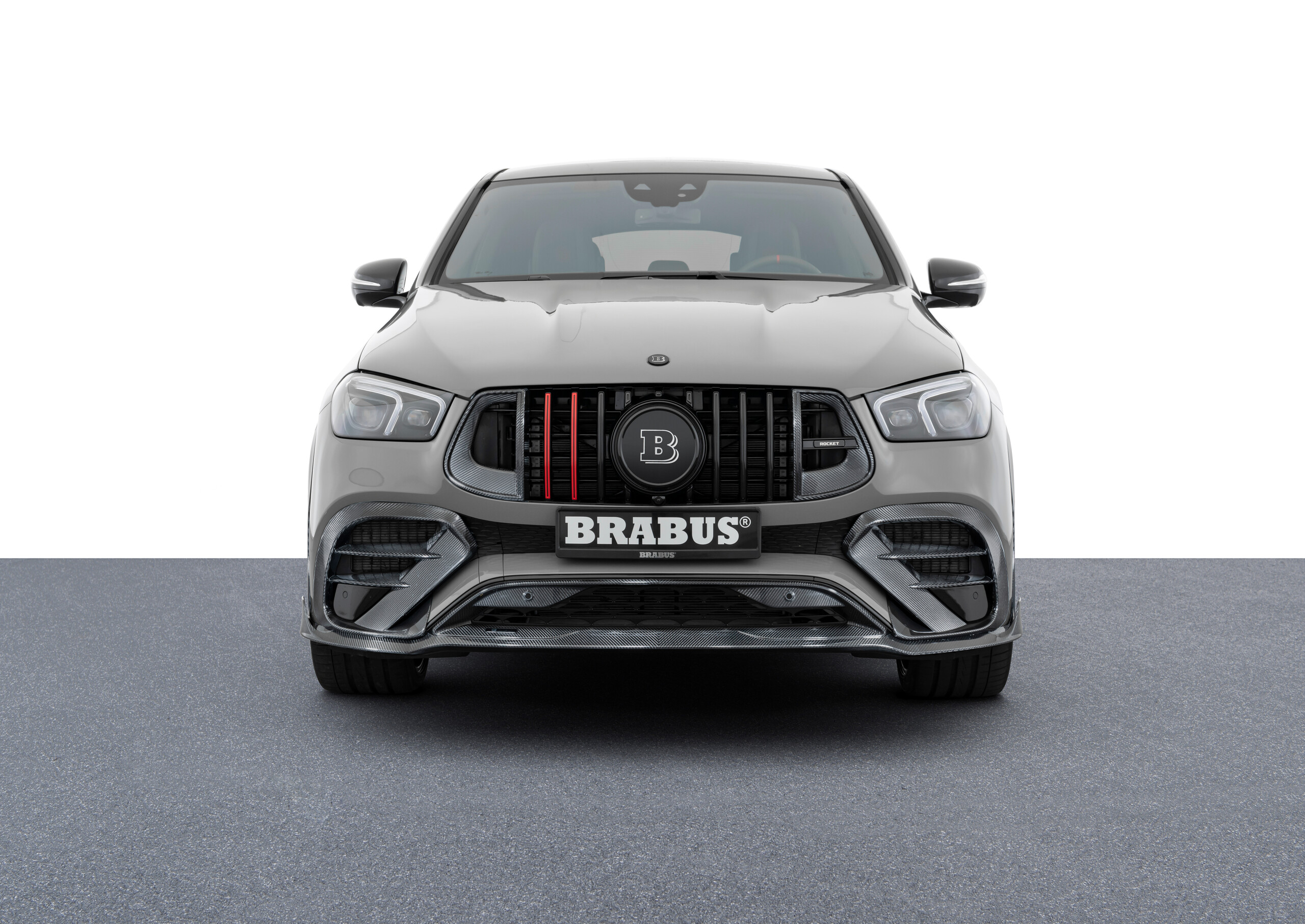
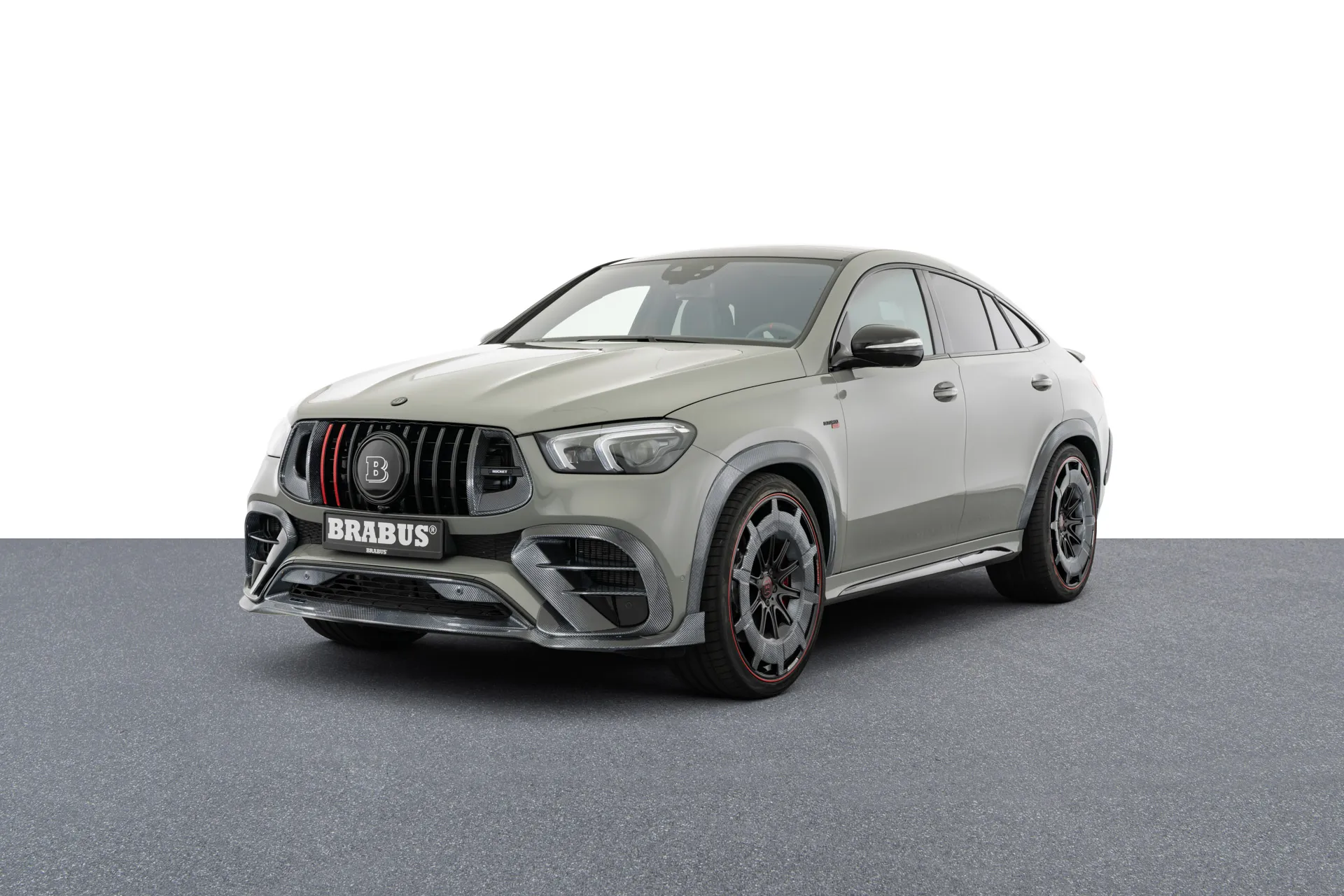
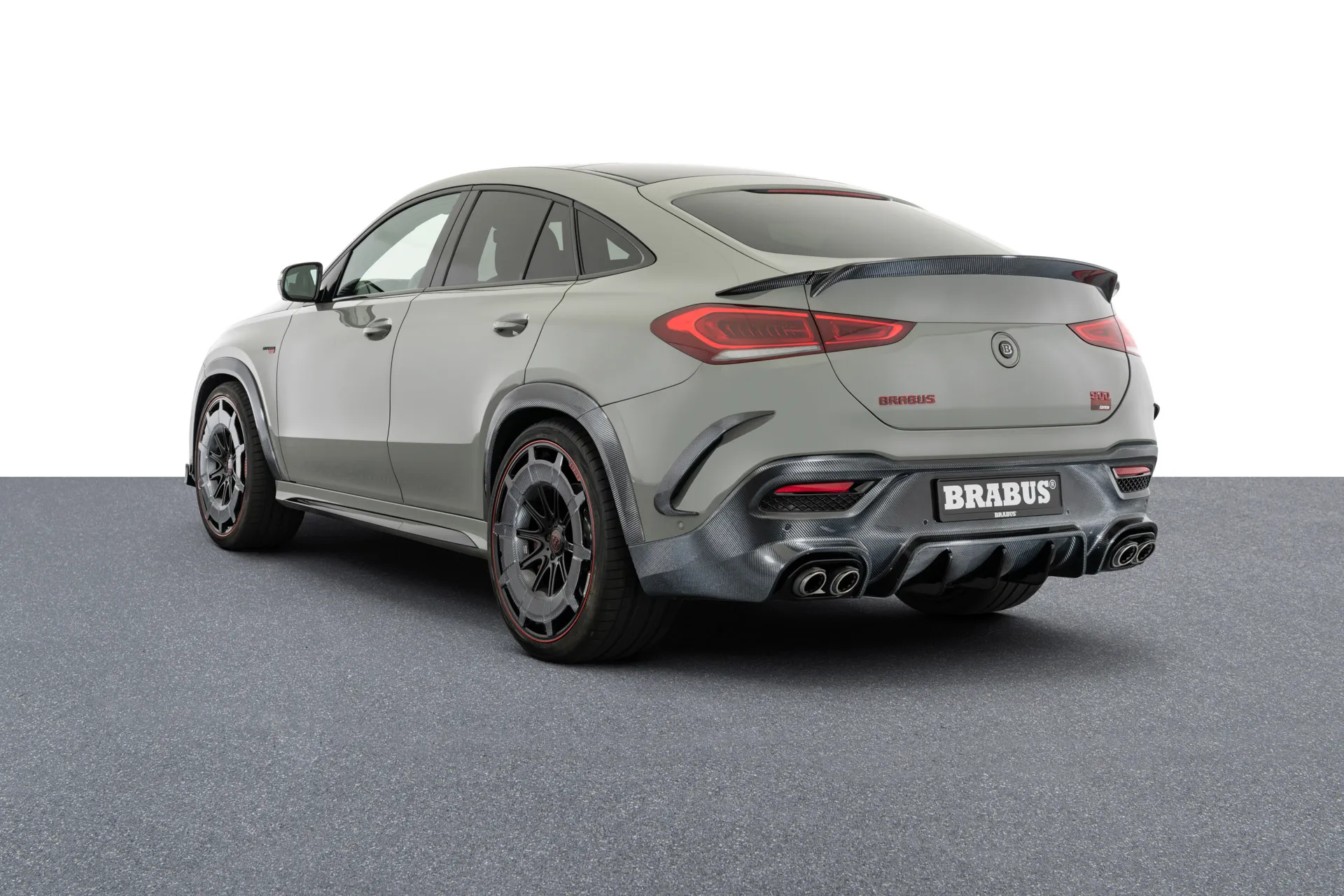
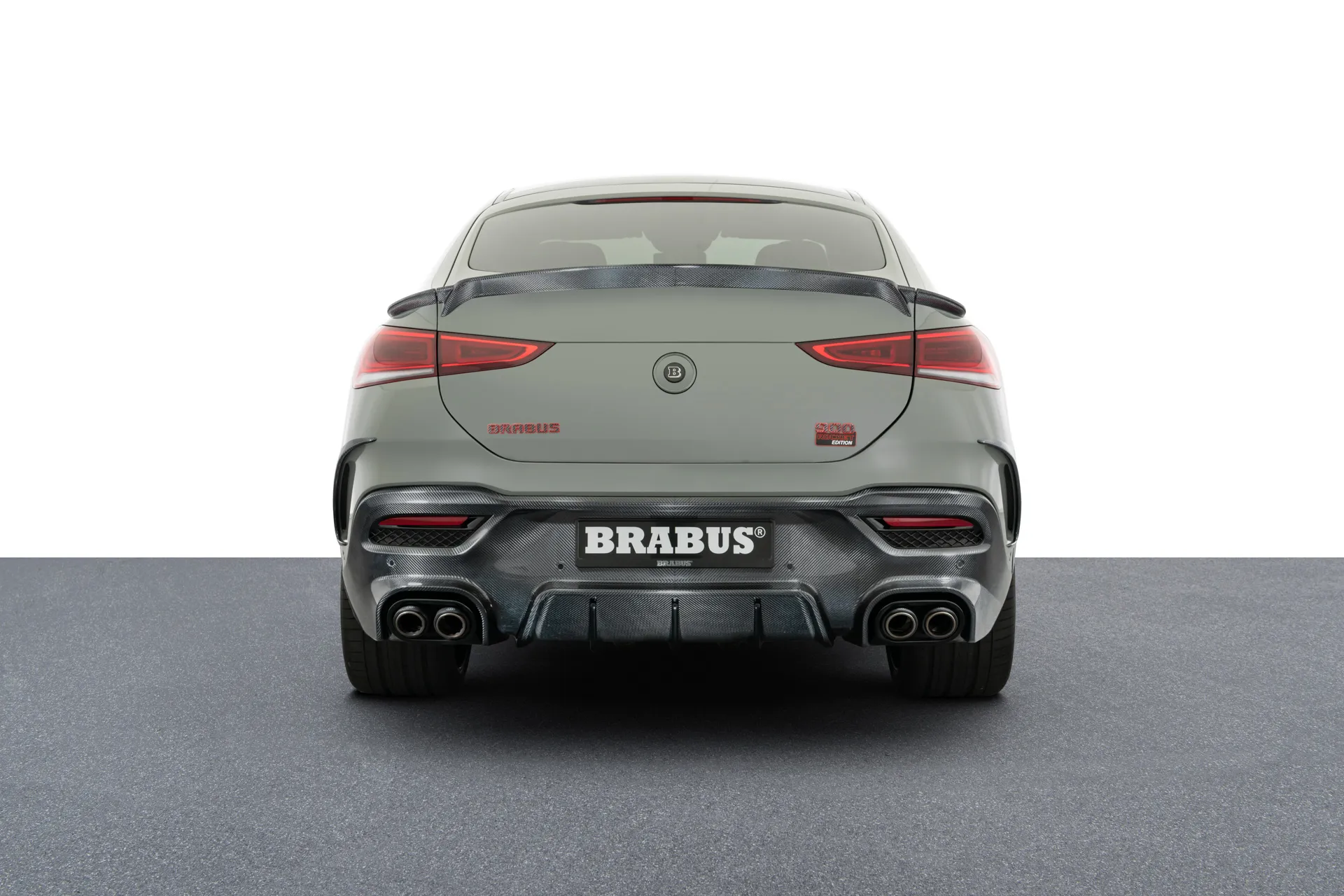
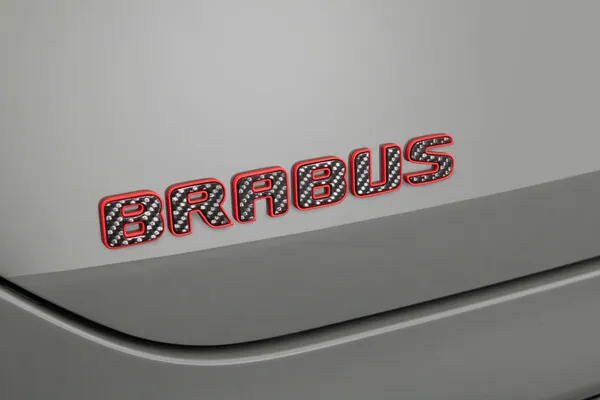
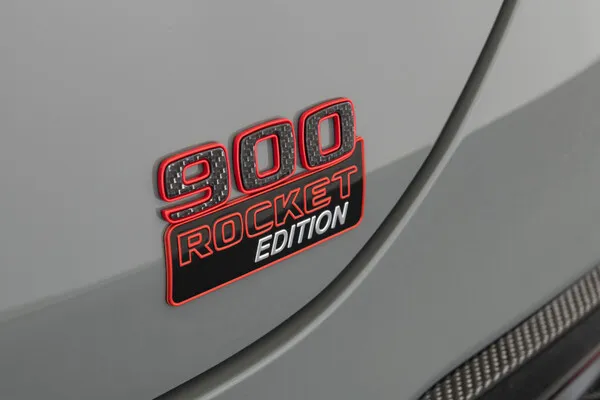
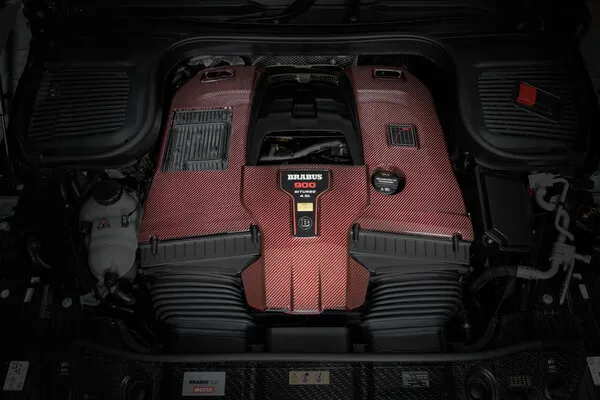
The Brabus Rocket 900 built on the Mercedes-Benz AMG GLE 63 S 4MATIC+ (V167, 2022-2024) is the most powerful street-legal GLE ever built and, in strict numeric terms, the most extreme SUV Brabus has ever signed. Production is capped at 25 cars worldwide, each hand-assembled in Bottrop, each individually numbered, each delivered with a Brabus-signed plaque in the centre console. Under the bonnet, the M177 4.0-litre twin-turbo V8 is rebuilt around larger Garrett MGT3077 turbochargers, sport-cat downpipes, a Brabus intercooler and intake, uprated injectors, a high-pressure fuel pump and a bespoke ECU plus TCU recalibration, lifting output from the factory 612 hp and 850 Nm to 900 hp and 1,250 Nm. Zero to 100 km/h falls to approximately 2.8 seconds; top speed is electronically limited to 330 km/h with indicated runs to 340+. The Rocket 900 is the boulevard halo that Brabus has always been capable of and has finally been permitted to build — a numbered, signed, fully engineered, fully TÜV-certified 900 hp luxury SUV that costs, fully optioned, somewhere between £380,000 and £500,000 and is already sold out with a waiting list. This guide explains, in engineering detail, exactly what the Rocket 900 package is, why it matters, and how the GLE 63 S V167 donor makes it all possible.
GLE 63 S V167 Key Specifications — Stock vs Brabus Rocket 900 vs Competitors
Platform Overview — MHA, AIRMATIC and E-ACTIVE BODY CONTROL 48V
The GLE 63 S V167 sits on Mercedes-Benz's MHA (Modular High Architecture) platform — the current-generation high-riding modular architecture shared with the GLS V167, the GLE Coupe C167 and, in modified form, the Maybach GLS 600. This is not to be confused with the old S-Class MRA/MHA_W222 architecture of the previous-generation S-Class — that car is off the production line and does not share running gear with the current GLE. The MHA V167 is critical to the Rocket 900 proposition for two reasons. First, the full AIRMATIC air-suspension system with adaptive damping is standard, which means the Brabus lowering module can drop the car 25-30 mm without voiding ride-height safety on roads with stochastic speed bumps. Second, the E-ACTIVE BODY CONTROL 48-volt hydraulic anti-roll system is optional on the 63 S and present on every Rocket 900 donor we have seen — it uses a 48 V electric pump to actively pressurise each damper individually, virtually eliminating body roll and allowing the GLE to corner flat at speeds that would have the previous W166 on its door handles. For a 2,630 kg SUV making 900 hp, E-ACTIVE BODY CONTROL is not a nice-to-have; it is what makes the car drivable on a B-road. Brabus recalibrates the system during the Rocket 900 build to account for the reduced ride height and increased unsprung mass of the 23-inch Monoblock M wheels.
The Rocket 900 Powertrain Package — MGT3077 Turbos, Headers, Intercooler, Injectors, ECU+TCU
This is the heart of the car and the reason the Rocket 900 exists. Every other line item — body kit, wheels, brakes, interior — is optional in principle; the powertrain conversion is not. The complete package comprises six engineered subsystems working together:
1. Larger Garrett MGT3077 turbochargers. The factory M177 ships with Garrett MGT2256S twin-scroll turbos, sized for 612 hp. The Rocket 900 replaces both units with Garrett MGT3077 hardware — larger compressor wheels, larger exhaust housings, revised wastegate actuators, ball-bearing centre cartridges for transient response. This is not a chip-only tune or a pulley swap; it is a hardware change that raises the boost ceiling from roughly 1.0 bar factory to approximately 1.4 bar measured. The MGT3077 is the same frame size Brabus uses on the full Rocket 900 S-Class and GLS builds and has been thoroughly validated for the M177.
2. Full sport-cat downpipes and custom headers. Factory primary catalysts are replaced with 3-inch stainless-steel downpipes and 200-cell metal sport cats, paired with Brabus custom exhaust headers designed to optimise scavenging for the larger turbos. This alone is worth roughly 50-70 hp and materially alters the sound character to a harder, more metallic bark. The system is fully TÜV-certified with sound-level measurements below the German Strassenverkehrs-Zulassungs-Ordnung ceiling.
3. Brabus intercooler and intake system. Factory intercooler capacity is marginal for sustained 900 hp operation — the inlet-air temperature rises rapidly under repeated full-throttle runs. Brabus fits a larger front-mount intercooler with increased core volume and revised end-tank geometry, paired with a carbon-fibre cold-air intake that routes directly to the grille for maximum ram-air effect at autobahn speeds.
4. Uprated fuel injectors and high-pressure pump. 900 hp on 98-octane requires roughly 50 percent more fuel mass per cylinder than 612 hp. Brabus installs larger-flow direct injectors matched to a higher-capacity high-pressure fuel pump, ensuring fuel-trim stability across the rev range and preventing the lean-out events that have killed less carefully engineered 900 hp conversions elsewhere.
5. Bespoke ECU and TCU recalibration. The engine-management software is not a chip — it is a fully rewritten calibration based on the Brabus internal dyno database for this exact hardware configuration, with revised boost-pressure, ignition-timing, lambda, camshaft-phasing and torque-request maps. The transmission-control-unit reflash adapts the 9G-Tronic shift logic to the additional torque, tightens shift-speed, and opens the torque-converter lockup calibration at lower gears.
6. Strengthened 9G-Tronic with uprated torque converter. Factory 9G-Tronic (TC-9XX family) is rated to approximately 1,000 Nm in OEM calibration. Brabus installs an uprated torque converter with strengthened turbine and stator internals, a reinforced clutch pack and a higher-capacity transmission cooler. Combined with the TCU reflash, the 9G happily handles the 1,250 Nm peak without the shift-shock or clutch-pack fatigue that plagues under-engineered 900 hp V8 conversions on OEM gearboxes.
The complete powertrain package alone costs £60,000-80,000 fitted and is what distinguishes the Rocket 900 from every other aftermarket GLE 63 on the road.
Wheels — Brabus Monoblock M 23" Forged, Pilot Sport Cup 2 N-Spec
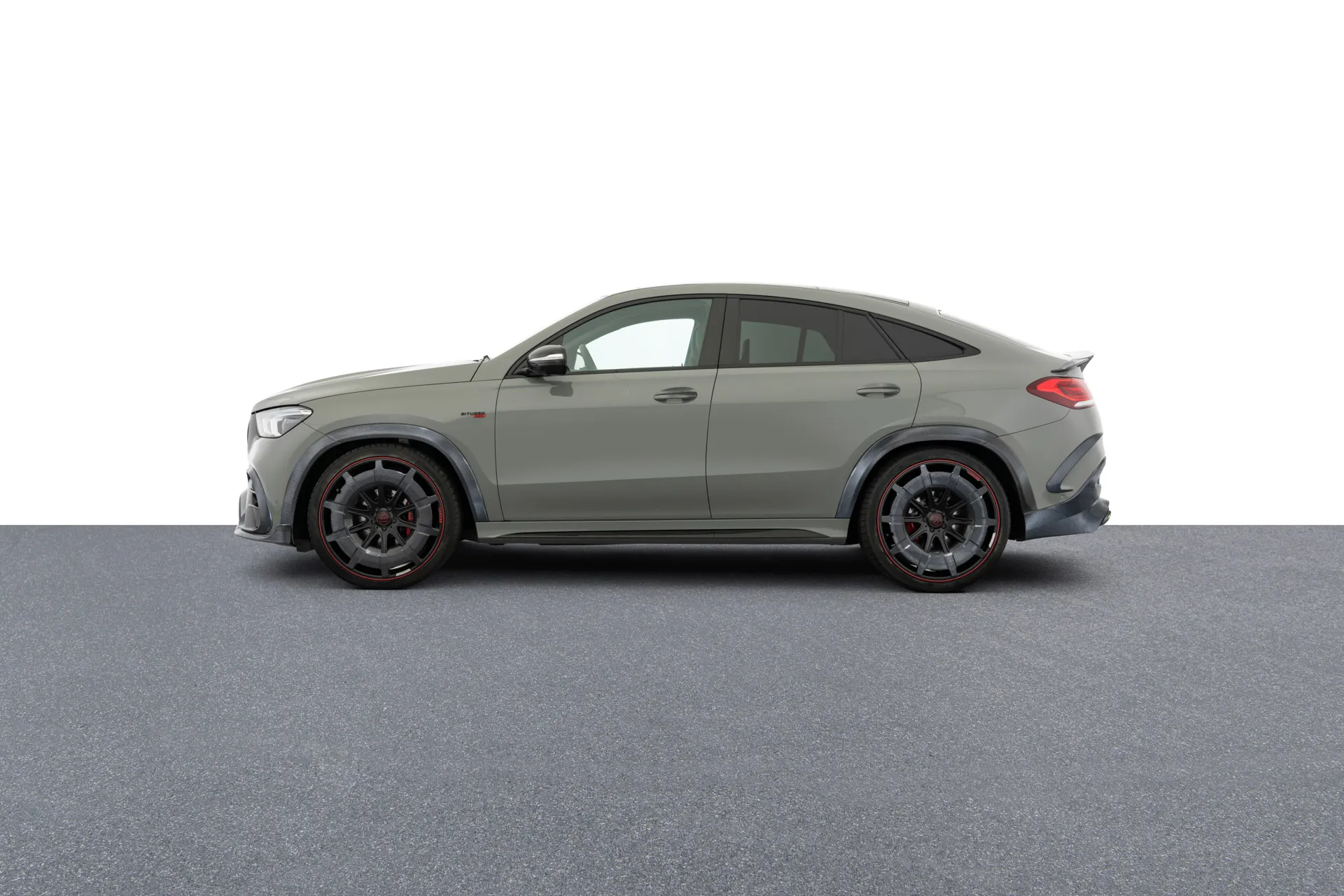
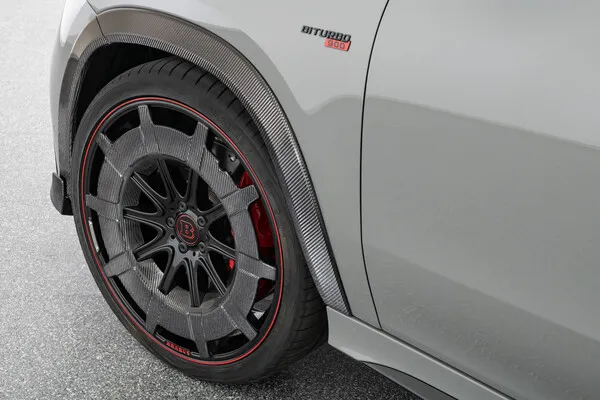
The Rocket 900 ships only on 23-inch Brabus Monoblock M forged wheels — it is not offered on the factory 22-inch set. Sizing is 23×10.5J ET40 front and 23×11.0J ET48 rear, a staggered setup that fills the Rocket widebody arches correctly and loads the rear contact patch for launch traction. Finishes are matt black or satin carbon, with the Brabus badge machined centrally. Tyre specification is Michelin Pilot Sport Cup 2 N-spec in 285/35 ZR23 front and 305/30 ZR23 rear or, as an alternative for clients who prefer a slightly more compliant street tyre with rain performance, Pirelli P Zero Corsa PZC4 in the same sizes. The Cup 2 N-spec compound is the tyre Porsche specified for the 911 GT3; running it on a 2,630 kg SUV is aggressive but defensible given the Rocket 900's intended use-case (fast road, occasional autobahn, minimal track exposure). The Monoblock M is a full forged-aluminium wheel rated for sustained operation at the car's 330 km/h electronic limiter. Wheel price is £18,000-22,000 for the set with tyres, balancing, alignment and TPMS programming. Brabus also offers the Monoblock P (multi-piece forged) and the 23-inch Monoblock Z as alternatives, but the M is the signature Rocket 900 wheel and the one specified for all 25 commission cars.
Body Kit — Brabus Rocket Widebody in Hand-Laid Carbon
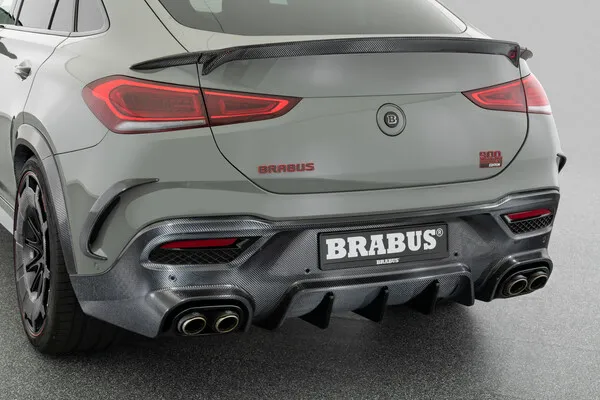
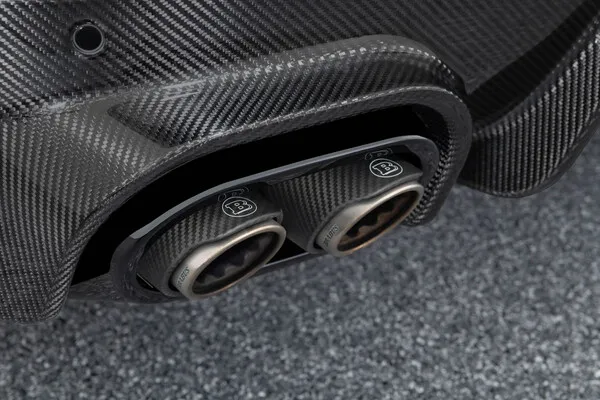
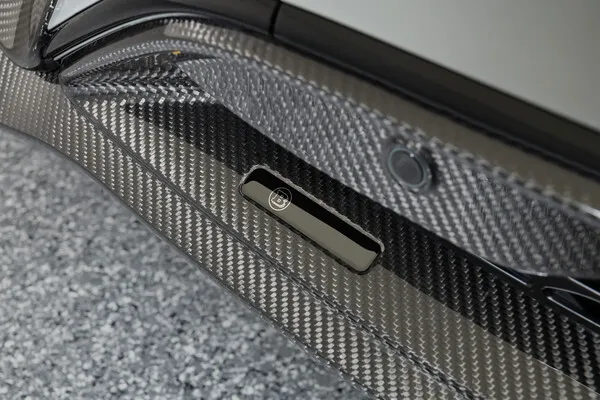
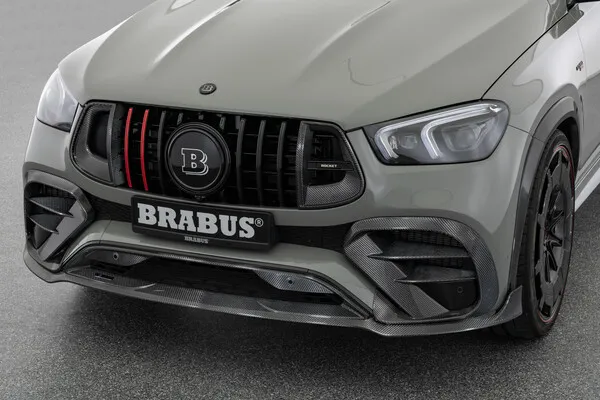
The Rocket 900 widebody is not a bolt-on bumper swap. It is a full Brabus carbon-fibre widebody programme comprising a reprofiled front bumper with integrated splitter and functional brake-cooling ducts, bolt-on carbon fender arches (+30 mm per side front and rear), carbon side skirts with LED courtesy lighting, a reprofiled rear bumper with integrated twin-exit diffuser and four-outlet exhaust, a carbon bootlid spoiler and a carbon roof spoiler that functions as both rear-glass shade and downforce element at autobahn speeds. Every panel is hand-laid, visible-weave carbon or painted-match PUR-RIM depending on customer specification. The complete widebody package costs £45,000-60,000 painted and fitted including paint-match to the donor and body-loom rework for the LED courtesy lighting. For clients who want the bodywork without the Brabus visual signature, Mansory, TopCar Design and Larte Design all offer competing V167 widebody programmes — TopCar's "Inferno" is the most aggressive, Larte's "Winner" the most understated, Mansory's the most theatrical — but no competitor offers anything equivalent to the full Rocket 900 programme, which is a closed engineering system combining body, chassis, powertrain and wheel geometry.
Brakes — Brabus PowerBrake 420 mm Carbon-Ceramic
900 hp with 2,630 kg of kerb weight requires brakes that can absorb genuine kinetic energy repeatedly without fade. Every Rocket 900 is fitted with the Brabus PowerBrake 420 mm carbon-ceramic big brake kit — 420 mm internally-vented carbon-ceramic rotors front and rear, six-piston fixed aluminium calipers at the front and four-piston at the rear, Brabus-specification braided lines and high-temperature brake fluid. Caliper colour is customer choice: red, black, gold, yellow, satin carbon. The kit replaces the factory AMG carbon-ceramic option — which is already excellent — with a system explicitly validated for sustained 330 km/h to zero deceleration and repeated autobahn-grade stops. Brabus PowerBrake is sold separately on other AMG platforms for roughly £25,000-35,000; on the Rocket 900 it is bundled into the package and certified alongside the rest of the car. No aftermarket alternative — not Brembo GT, not AP Racing, not Alcon — reaches the same level of integration with the Rocket 900's E-ACTIVE BODY CONTROL ABS mapping.
Interior — Brabus Fine Leather, Alcantara Roof, Rocket 900 Signed Plaque
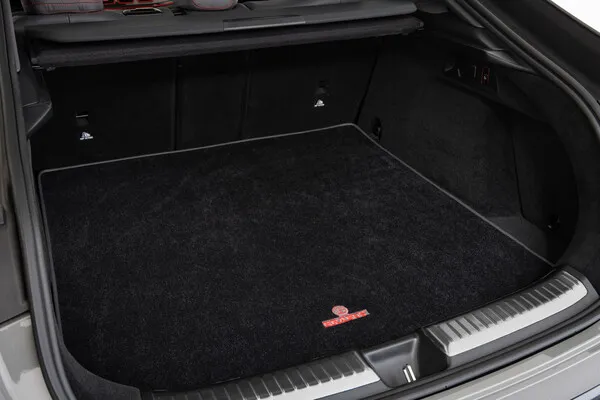
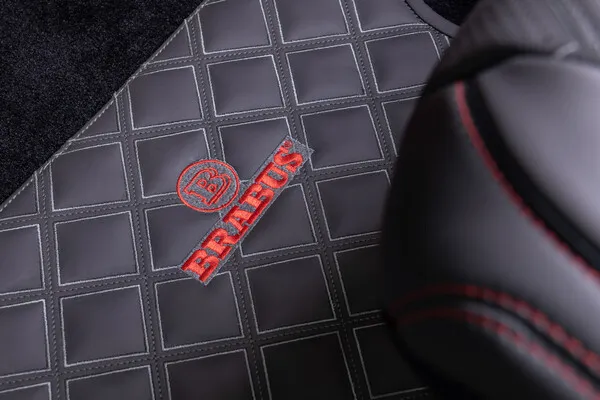
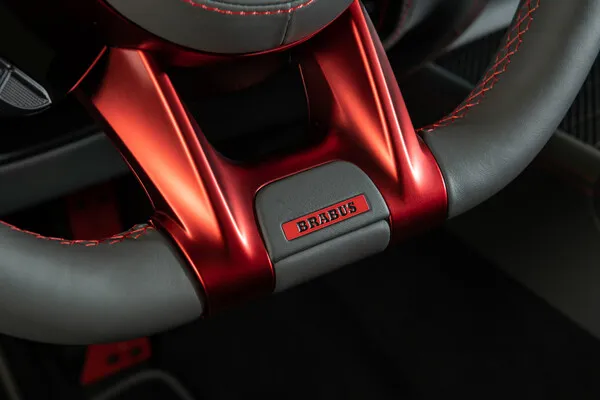
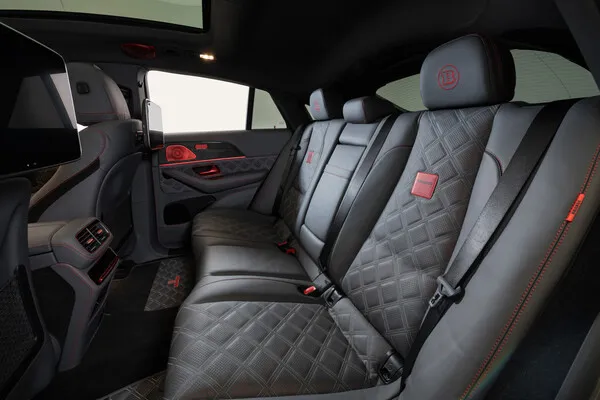
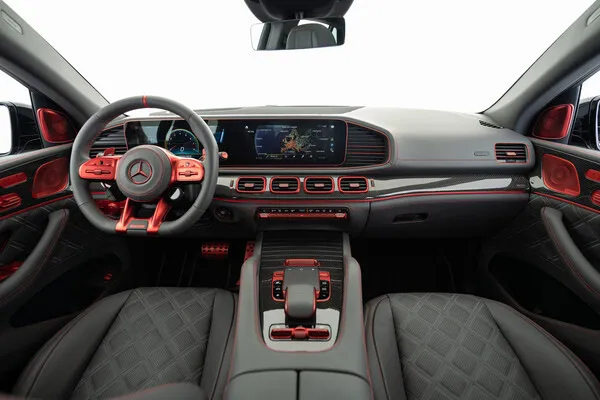
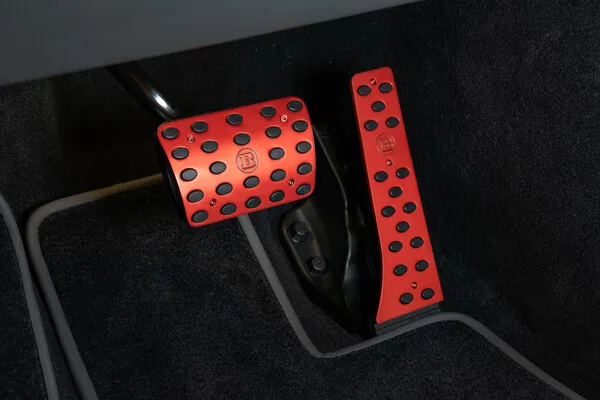
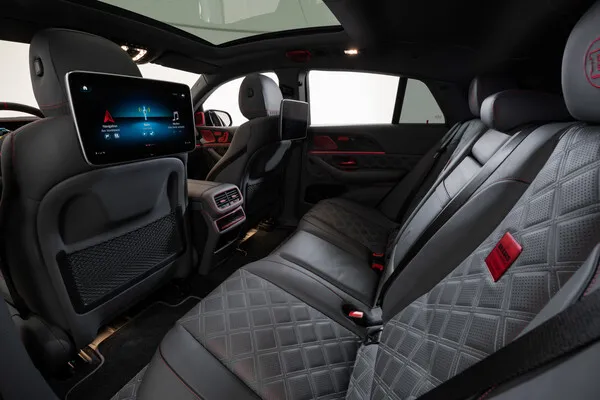
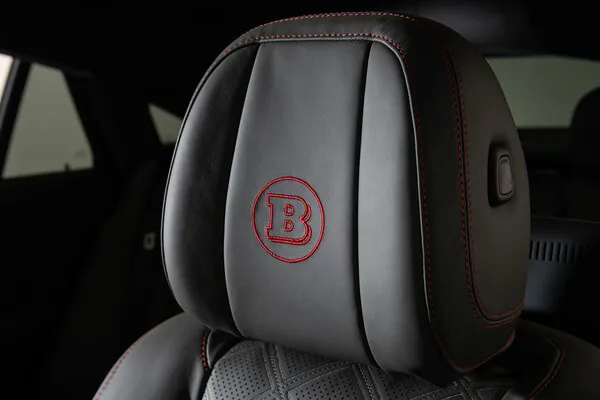
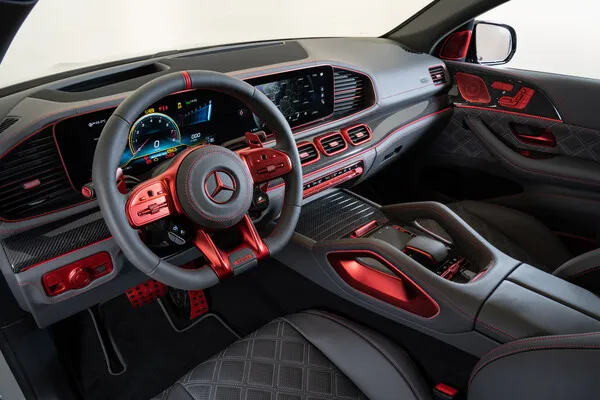
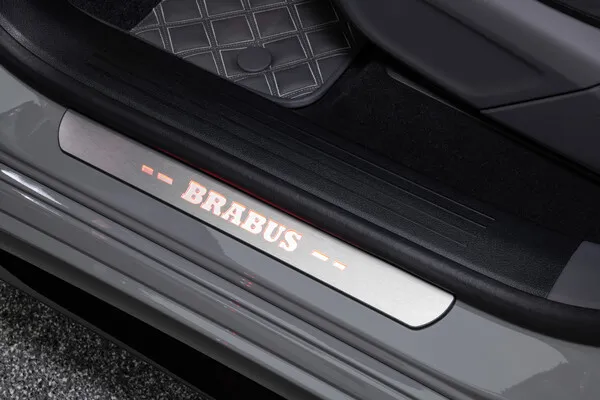
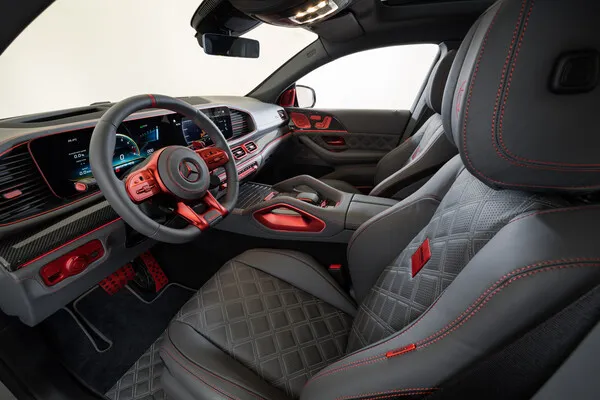
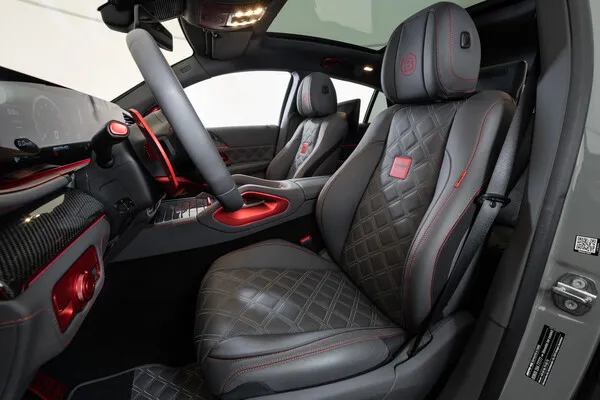
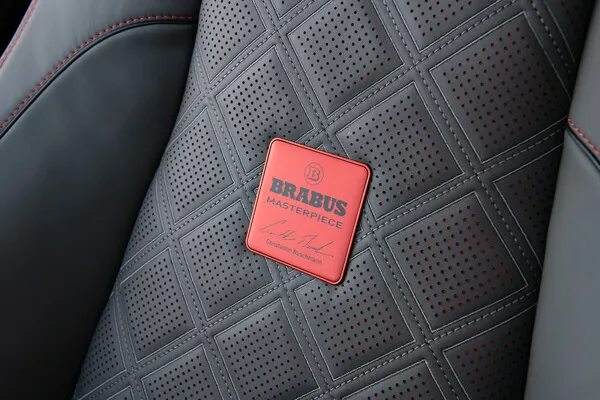
The interior retrim is what elevates the Rocket 900 from "a very fast GLE" to "a numbered, signed, one-of-25 limited-edition halo car." Every cabin is hand-trimmed at Bottrop in Brabus Fine Leather in any colour combination — the most common specification is black with red contrast stitching and carbon-fibre trim inserts, but white with blue, cognac with black, or full designo Exclusive hides are all available. The roof and pillars are retrimmed in Alcantara, the pedals and scuff plates are in Brabus aluminium, the steering wheel is a bespoke Brabus carbon-Alcantara unit with the Rocket 900 logo at twelve o'clock, and the centre-console carries a polished-aluminium plaque engraved with the car's number (1 of 25) and signed by Brabus CEO Constantin Buschmann. The interior programme alone costs £35,000-50,000 depending on specification; a ceramic coating and full front PPF adds another £5,000-8,000 and is recommended as standard. Some owners additionally commission Carlex Design or Vilner for secondary work — typically custom headrest embroidery, rear-console champagne refrigeration or rear-seat 4K entertainment screens — but the Brabus base retrim is complete on delivery.
Track Day or Daily Driver? Can You Actually Track a Rocket 900?
In theory, yes. The Rocket 900 has 900 hp, upgraded carbon-ceramic brakes rated for repeated 330-to-zero stops, Michelin Cup 2 N-spec tyres and the E-ACTIVE BODY CONTROL anti-roll system that keeps the body flat through Karussell or Parabolica. A Nürburgring lap is feasible and has been informally timed by enthusiast owners at around 8:00-8:15 — quick for a 2,630 kg SUV but not remotely close to what a lighter car achieves. The harder truth is that limited-edition status and kerb weight make lap times secondary. Rocket 900 owners do not typically queue at the Nordschleife Touristenfahrten gate; they park at the Fairmont Monte Carlo. The car is a proof-of-concept halo object — a demonstration of what Brabus can engineer when commercial constraints are removed — not a race car. It is, in the best possible sense, the fastest school run in the world. For genuine track use the correct tools are a Lamborghini Urus Performante (2,150 kg, mid-engine-derived air-suspension programme, proper track calibration), a Porsche Cayenne Turbo GT (650 hp but focused chassis tuning with PTV Plus), or — outside the SUV category — a BMW M5 CS or Porsche 911 GT3 RS. Drag-race performance is a different question: Rocket 900 owners have recorded quarter-mile times in the mid-10s at proper drag strips, which makes the car genuinely competitive against anything short of a tuned Demon or a Tesla Plaid. Tyre choice matters here: Cup 2 N-spec for autobahn and the occasional hot lap, Pirelli P Zero Corsa PZC4 for clients who want rain performance, stock Michelin Pilot Sport 4 SUV (285/40 ZR22) for winter-adjacent daily driving. Final frame: the Rocket 900 is a street weapon first, a halo-collectible second, a quarter-mile car third, and a circuit-racer distant fourth. Buy it for boulevards and the occasional autobahn; buy something else for Silverstone.
Frequently Asked Questions
Rocket 900 vs Brabus 800 — which tier makes sense for a GLE 63 S owner?
These are genuinely different products, not marketing tiers. The Brabus 800 is a series-production package for the GLE 63 S and the GLS 63 — ECU plus downpipes plus intercooler plus exhaust, keeping the factory turbo hardware, delivering 800 hp and 1,000 Nm. It is available to any GLE 63 S owner on a rolling basis, costs approximately £40,000-55,000 fitted, and retains the factory reliability envelope. The Rocket 900 is a one-of-25 limited edition built on 2023-2024 donors only, sold out as of writing, and adds full widebody, PowerBrake PCCB, Monoblock M 23" wheels, bespoke interior with signed plaque, and critically the MGT3077 turbo hardware that the Brabus 800 does not include. Specify Brabus 800 if you want a very fast GLE to drive daily; specify Rocket 900 — if you can secure a pre-owned slot or commission car — if you want a numbered collectible that happens to be the most powerful street-legal GLE ever built. The residual-value proposition differs materially: the Brabus 800 depreciates with the donor; the Rocket 900 is already appreciating as the 25 cars disperse globally and none return to market.
How long will the M177 V8 last at 900 hp, and what is the service schedule?
The M177 is a robust engine in stock form — it is the V8 Mercedes chose for the C 63, E 63, S 63, GLE 63, GLS 63 and G 63, and it has been in production since 2014. At 900 hp with Brabus MGT3077 hardware, proper fuel-system uprating and a correctly calibrated ECU, the engine's service life is effectively unchanged from stock provided service discipline is maintained. Brabus specifies 12-month or 10,000 km service intervals (whichever first) using Brabus-approved oil, plugs and filters, with a biennial boost-pressure dyno verification and carbon-intake decoke. Owners who follow this schedule routinely exceed 80,000-100,000 km on Rocket 900 turbo hardware without major intervention. Owners who stretch intervals, use non-approved oil or run cheap 95-octane fuel see premature turbo-shaft wear and, eventually, cat failure. The 9G-Tronic transmission with the uprated Brabus torque converter has its own service schedule — ATF change every 60,000 km — which is stricter than stock, and non-negotiable.
What about warranty coverage for a limited-edition Rocket 900?
The factory Mercedes-Benz warranty on the donor GLE 63 S is voided on any tuned item once Brabus hardware is fitted — this is universal and unavoidable. In its place, Brabus provides its own Brabus warranty programme covering the Rocket 900 conversion for 2 years or 100,000 km from delivery, with optional extensions available. The warranty covers the complete powertrain conversion (turbos, injectors, HPFP, ECU/TCU, uprated torque converter), the widebody bodywork, the Monoblock M wheels and the PowerBrake brake kit — i.e. every Brabus-installed component. It does not cover the base GLE 63 S systems that are not touched by the conversion; for those, clients typically purchase extended Mercedes-Benz MobiloLife coverage before the Brabus conversion starts. Servicing must be performed either at Brabus Bottrop or at one of the Brabus-approved regional installers; independent Mercedes-Benz dealer servicing is technically possible for non-Brabus items but will not preserve the Brabus warranty on tuned components. In practice, serious Rocket 900 owners fly the car back to Bottrop annually for the main service and use a regional installer for tyres and inspections in between.
What is the resale trajectory for a Rocket 900 through 2024-2030?
With only 25 cars worldwide and 2024 production already sold out, the Rocket 900 resale curve behaves differently from any other GLE. The Brabus 800 GLE depreciates in line with the donor — roughly 12-15 percent per year — because it is effectively a factory-grade tune on a mass-market chassis. The Rocket 900 has already shown early price strength in the secondary market: 2023 cars that were delivered at roughly £420,000 have traded privately above the original asking price when owners have flipped, and our working view is that the 25-car cap combined with Brabus's recent move toward more limited-series products means the Rocket 900 is the first modern Brabus build with a credible case for appreciation rather than depreciation across the 2024-2030 horizon. The critical caveat is documentation: a Rocket 900 with complete Brabus service history, original delivery paperwork, plaque intact and mileage under 30,000 km at end of decade will trade at a premium; a car missing any of these elements will trade like a used GLE 63 S with aftermarket parts, which is a completely different residual value. Buy with provenance, keep the paperwork together, service at Brabus-approved installers, and the 25-car rarity compounds in the owner's favour.