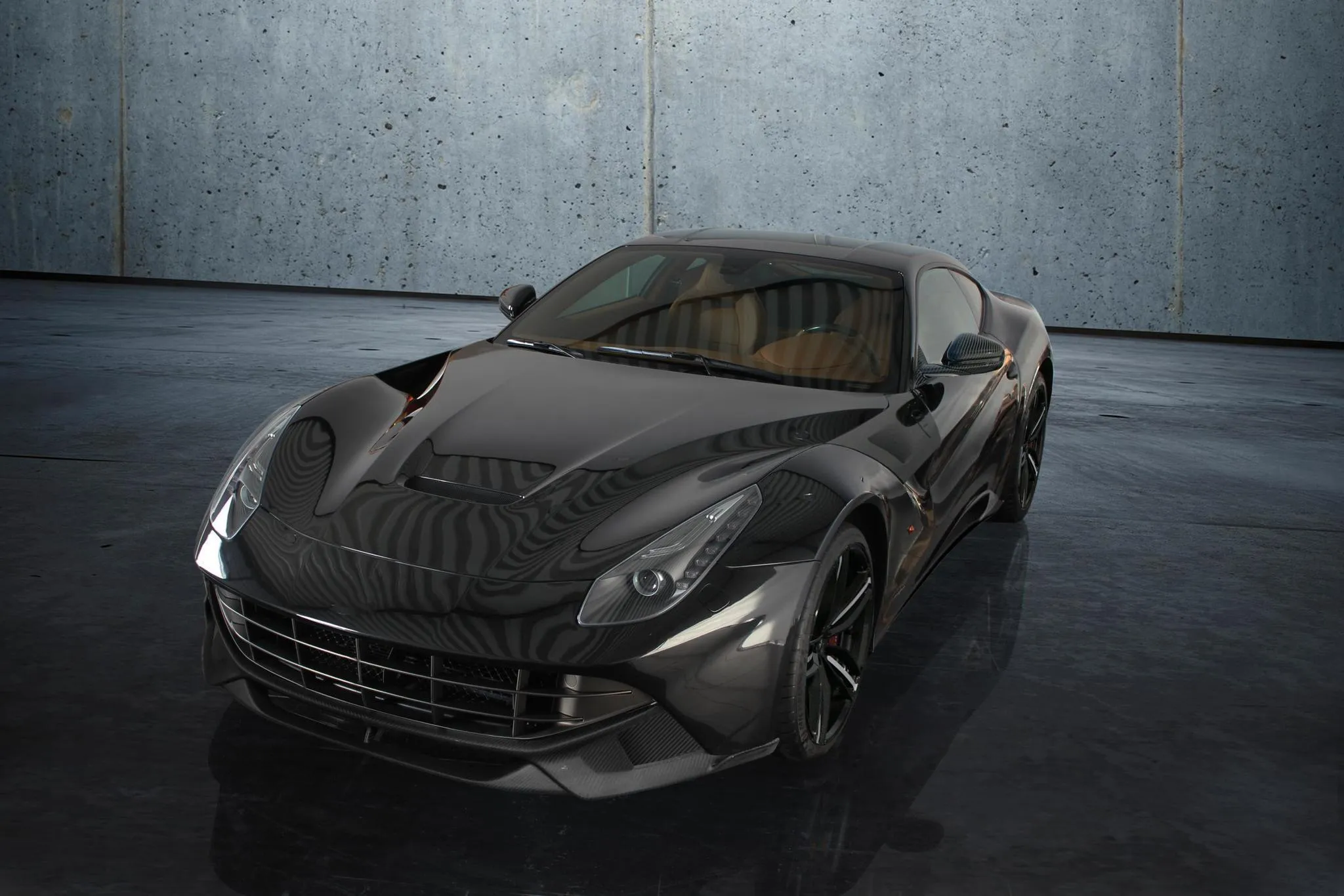
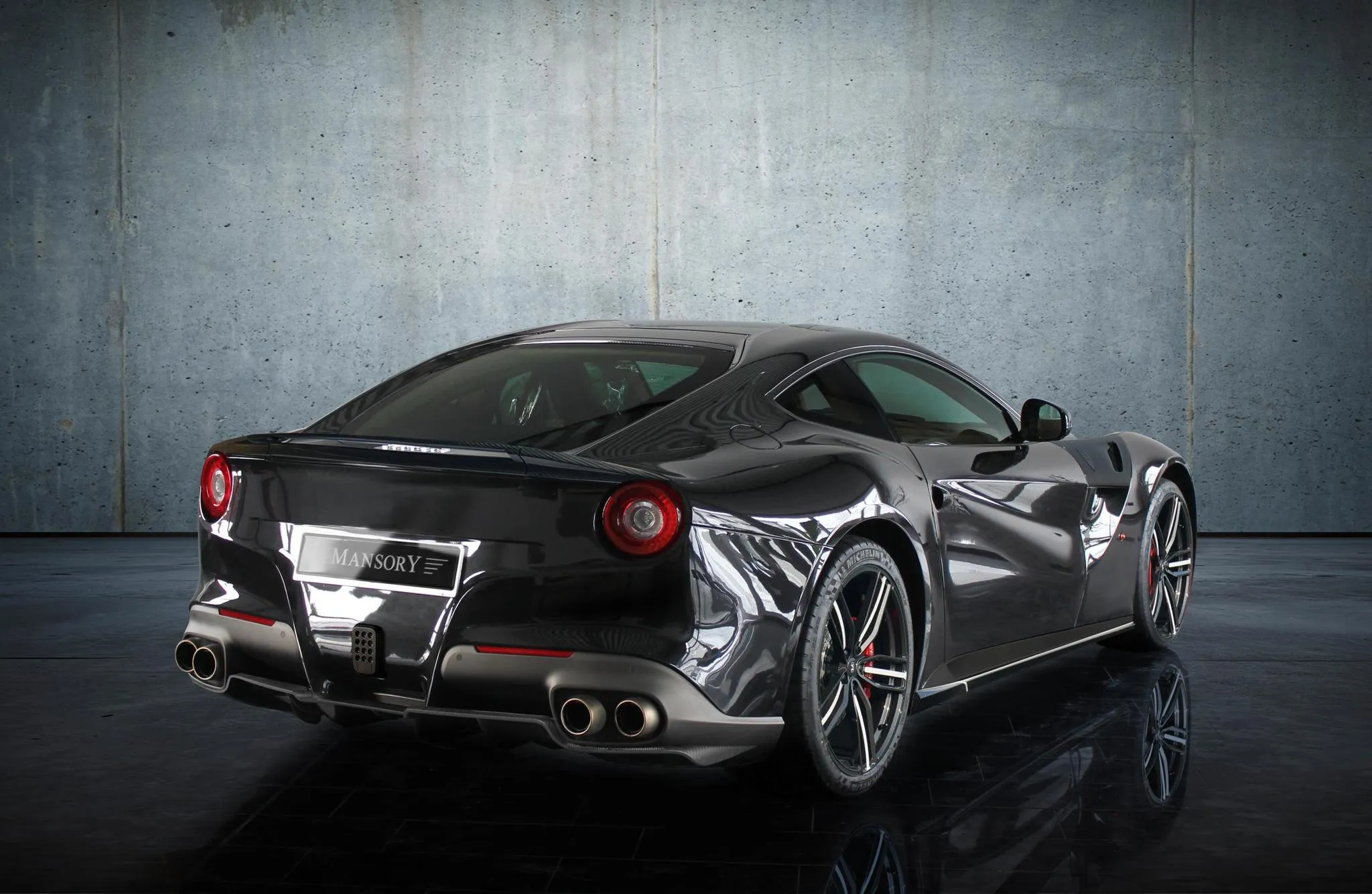
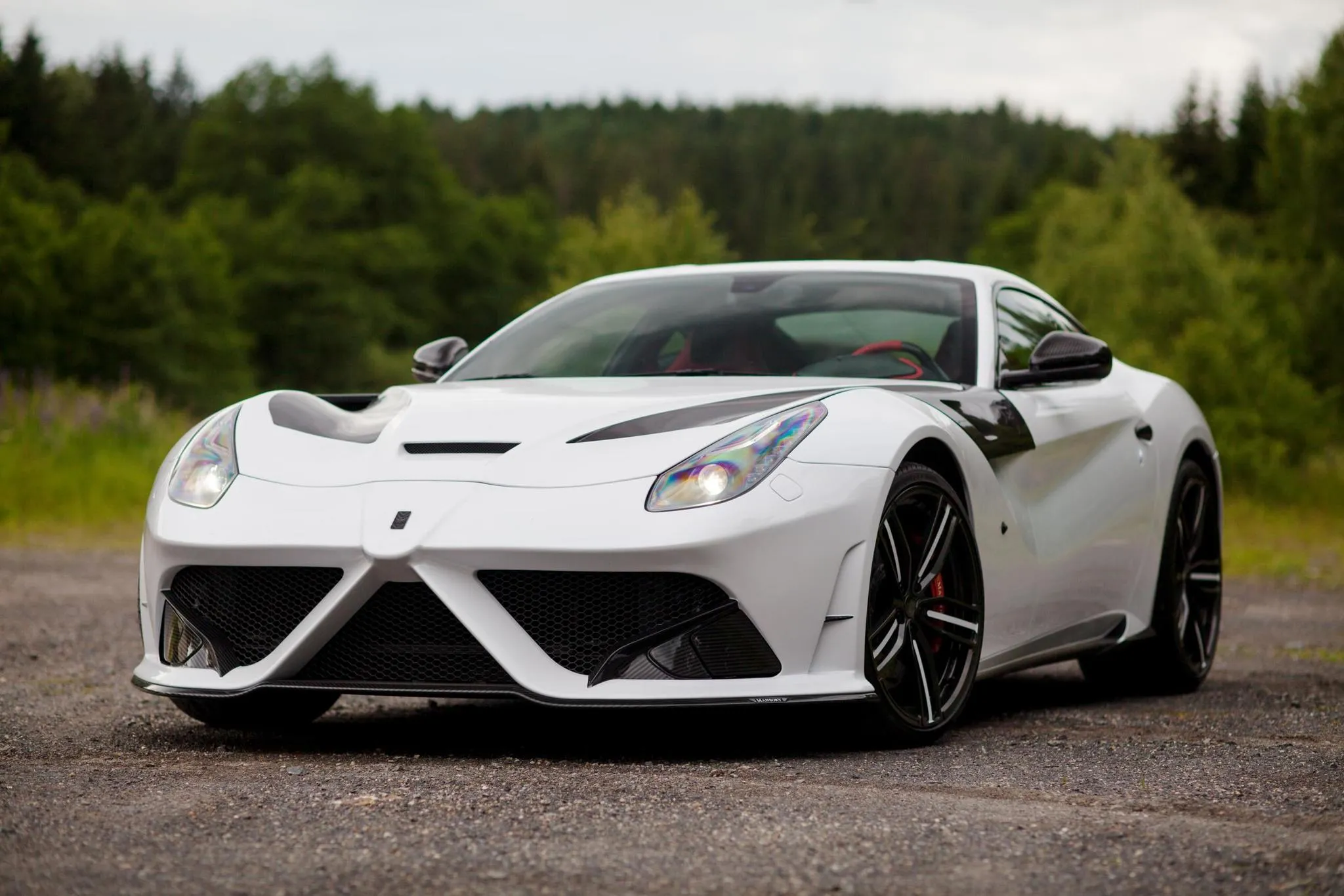
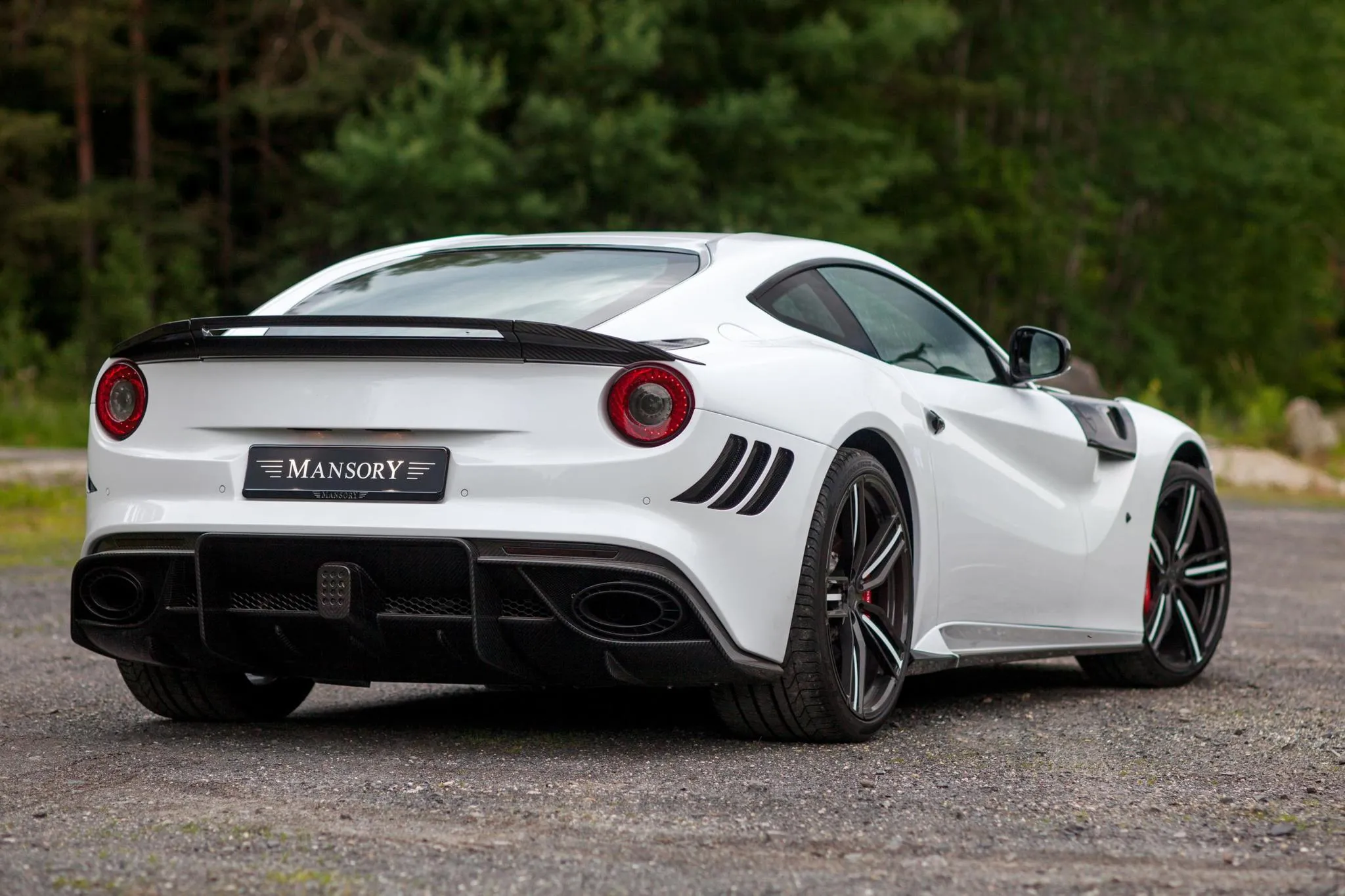
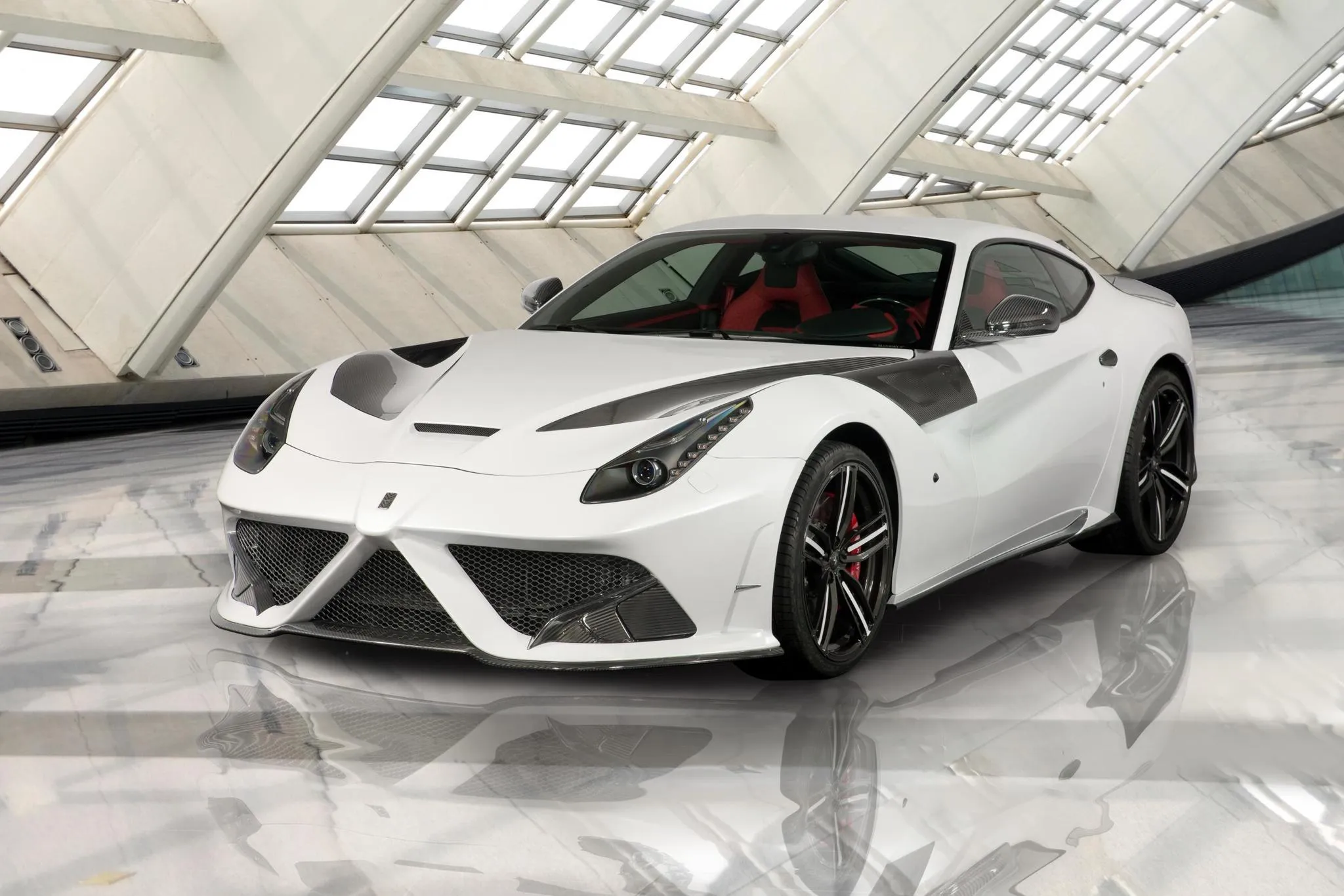
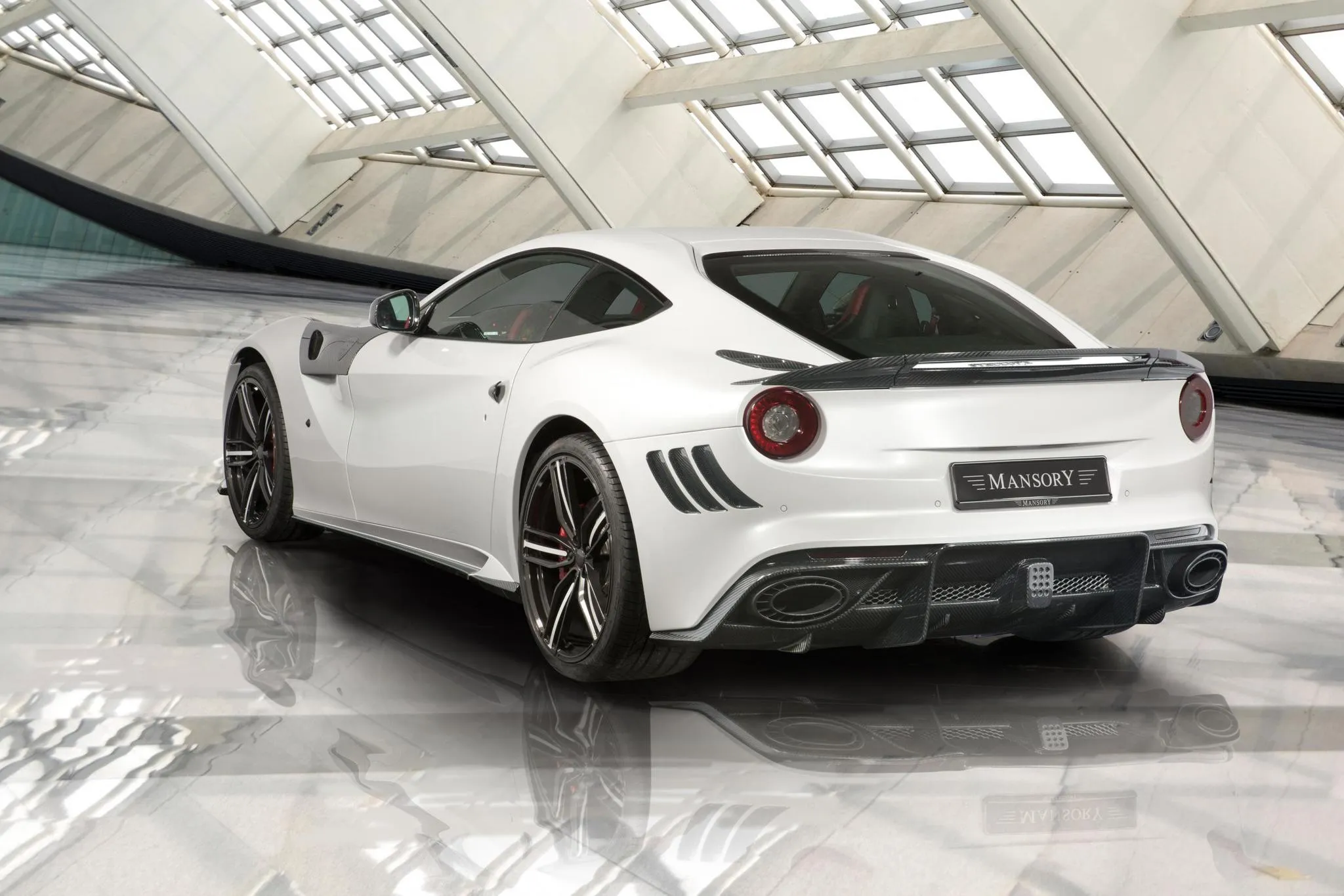
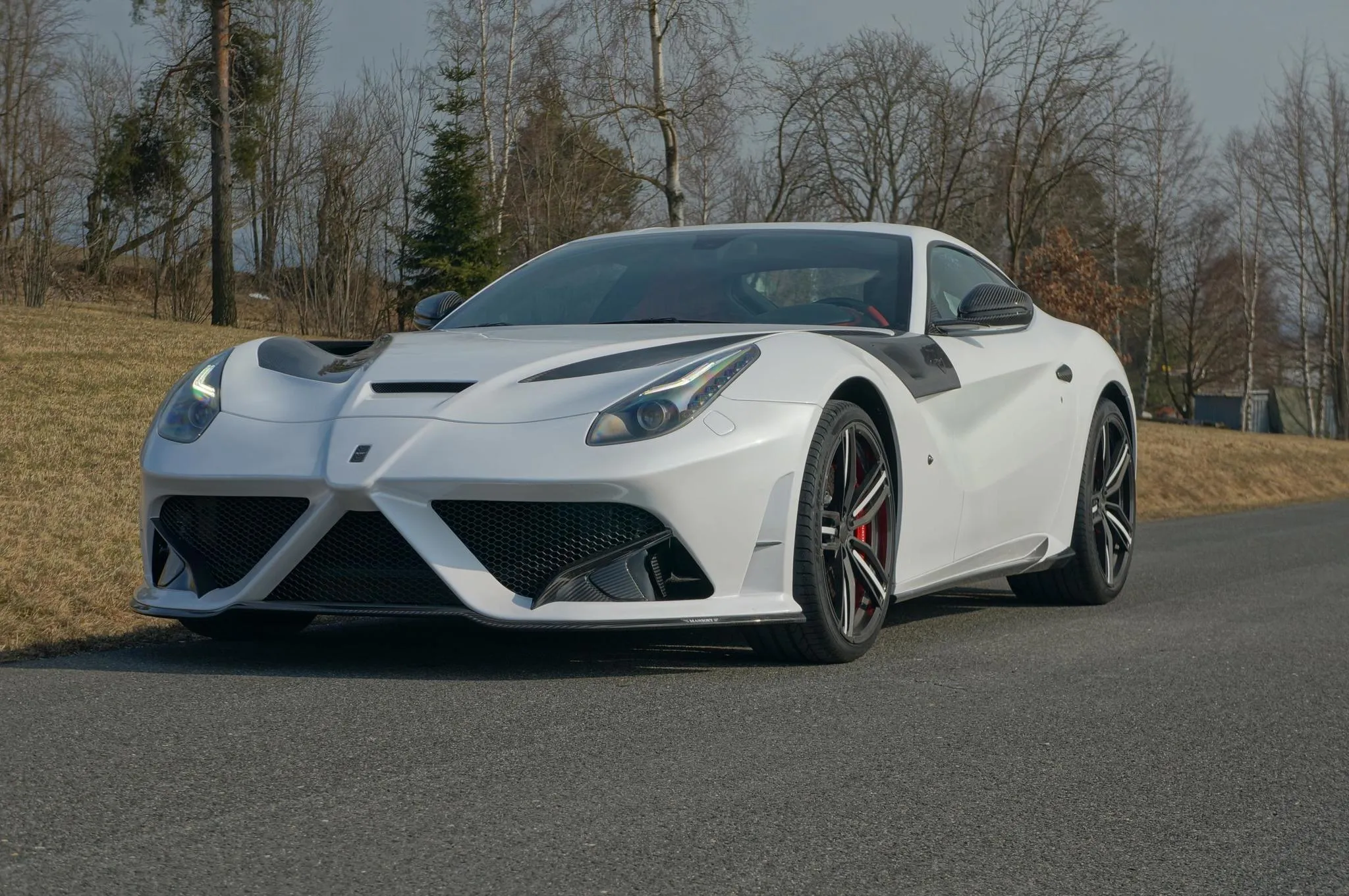
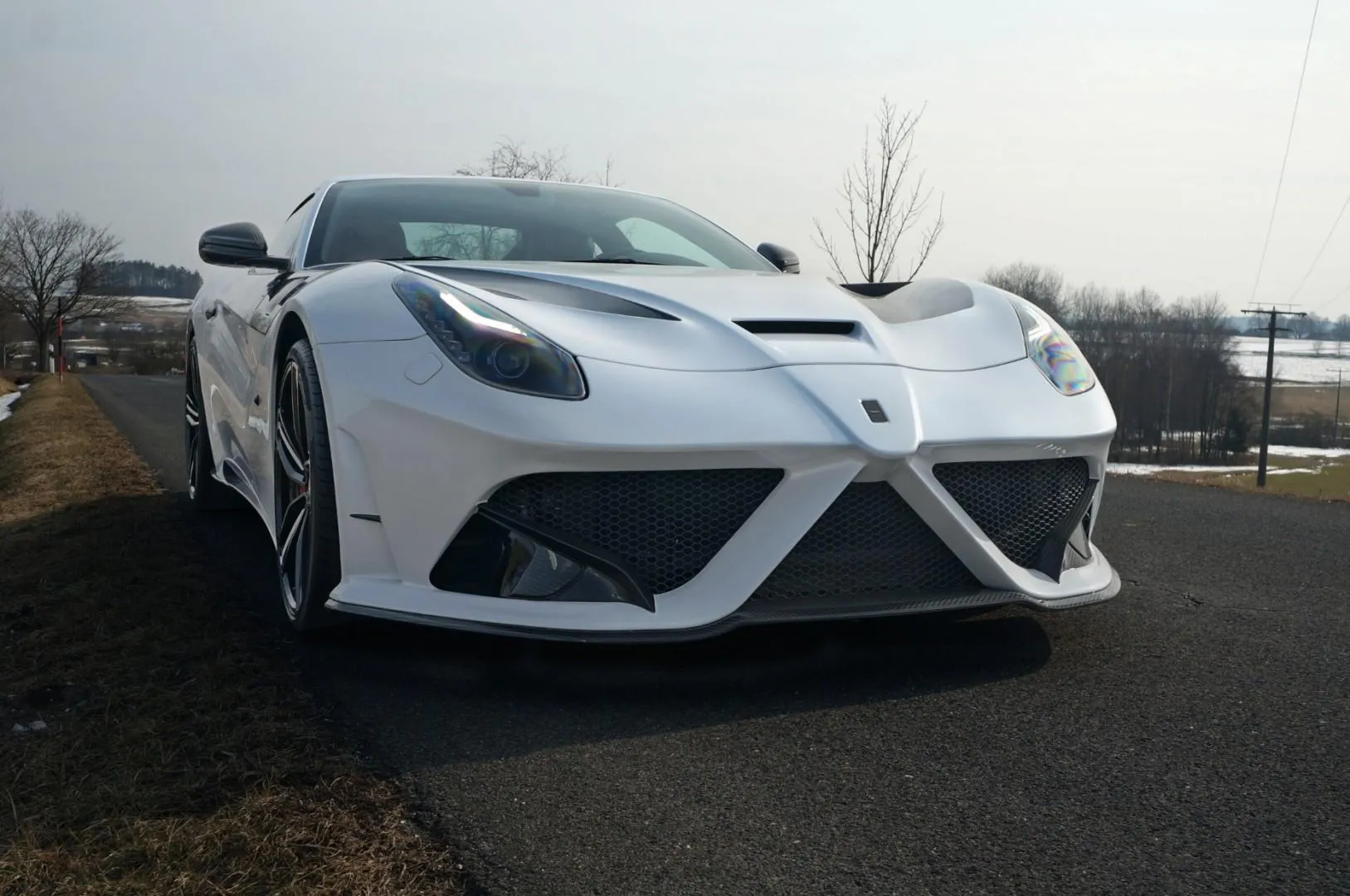
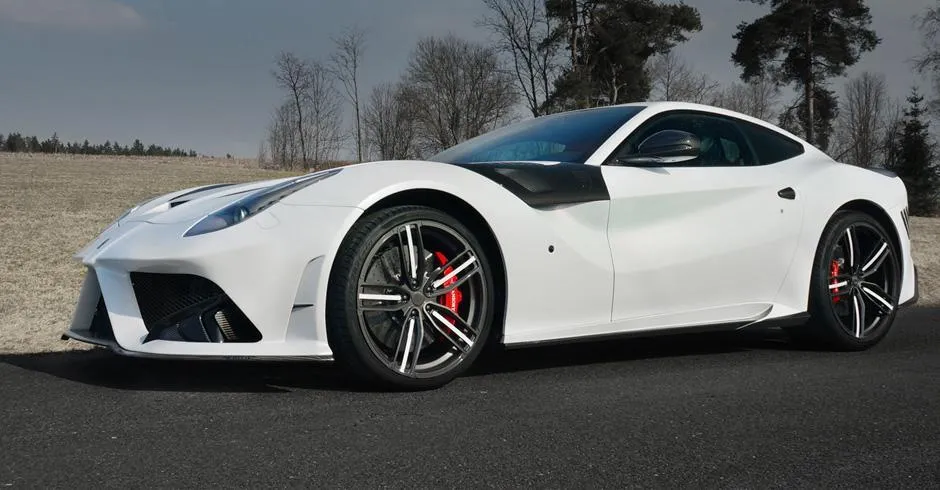
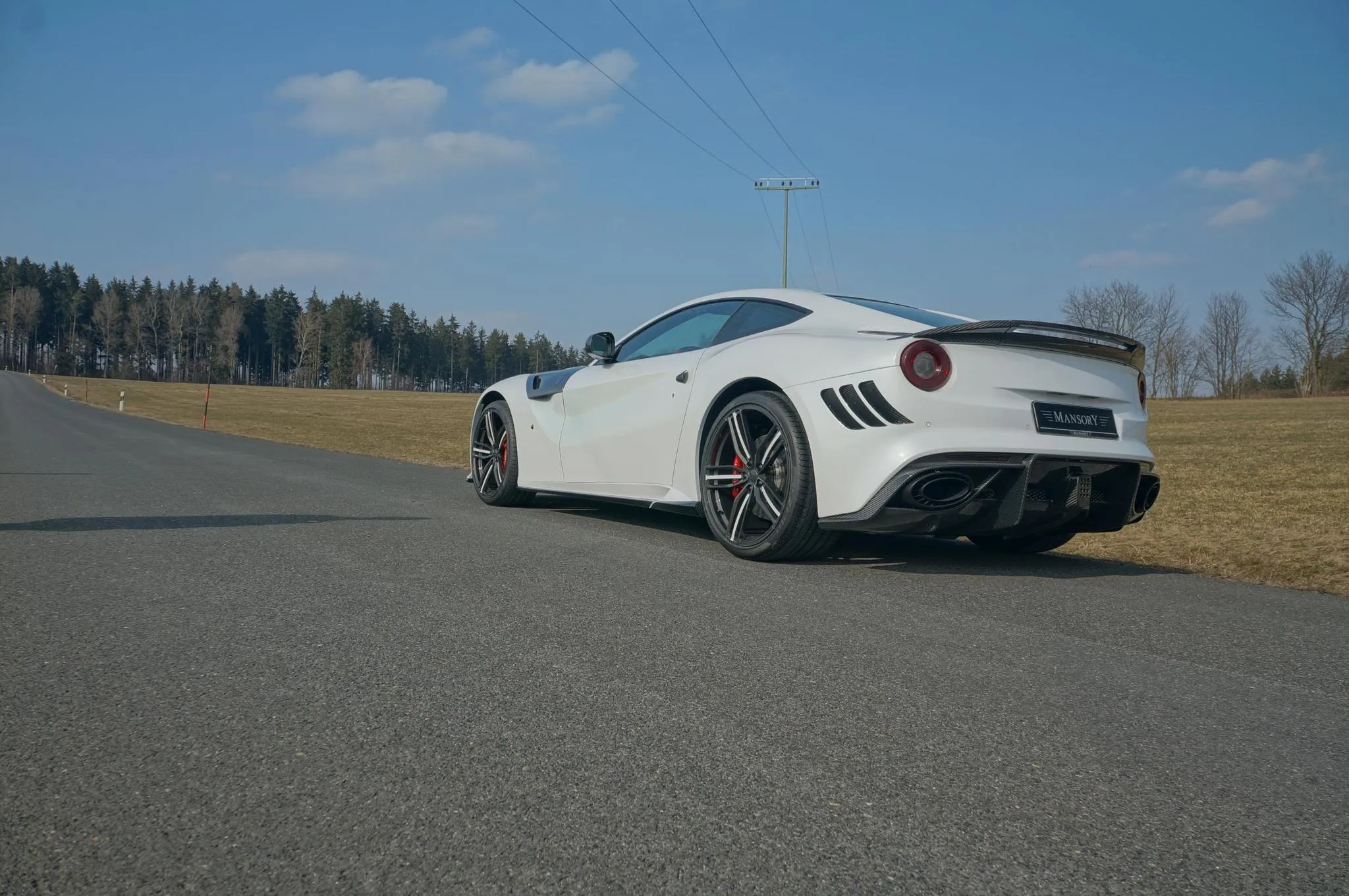
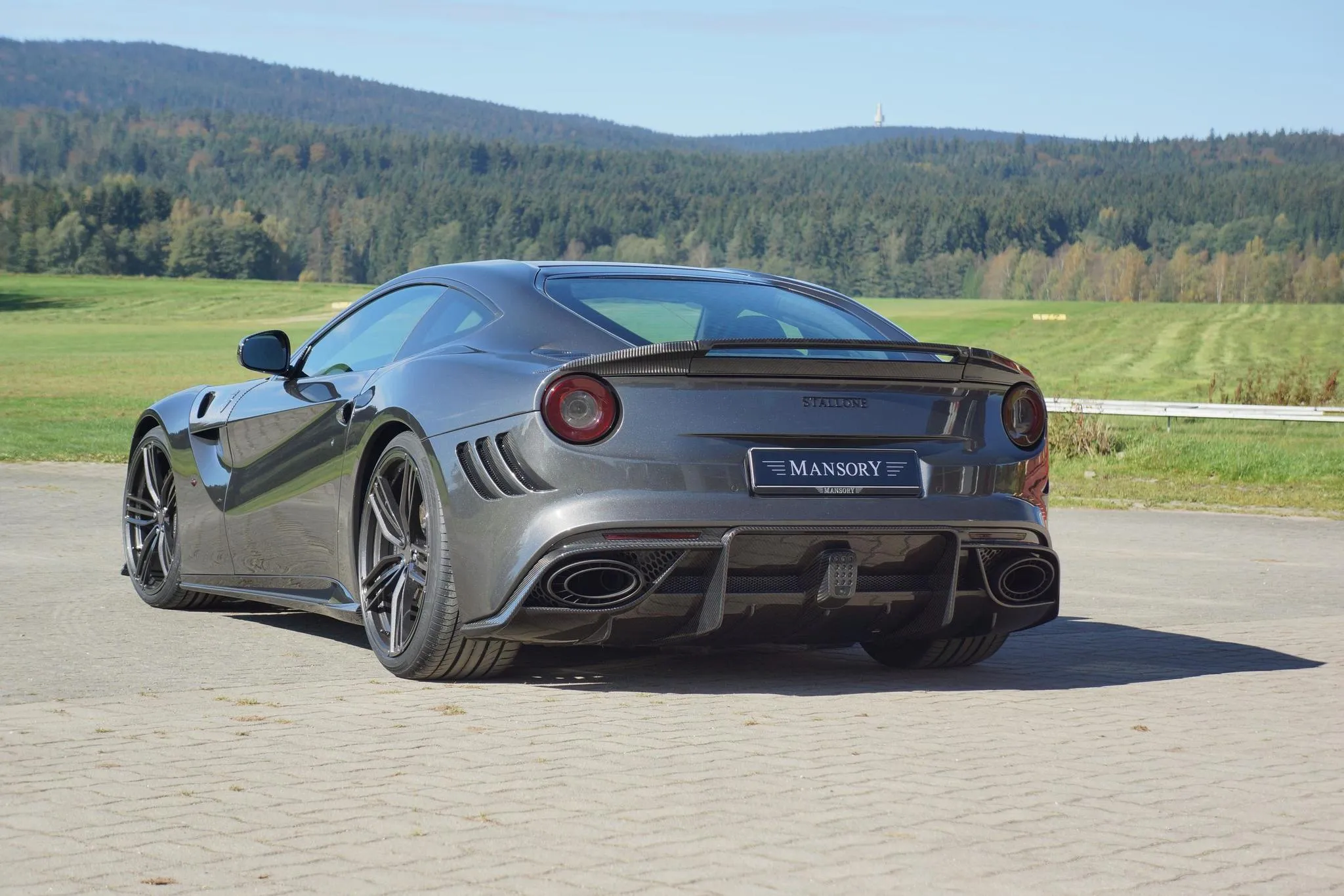
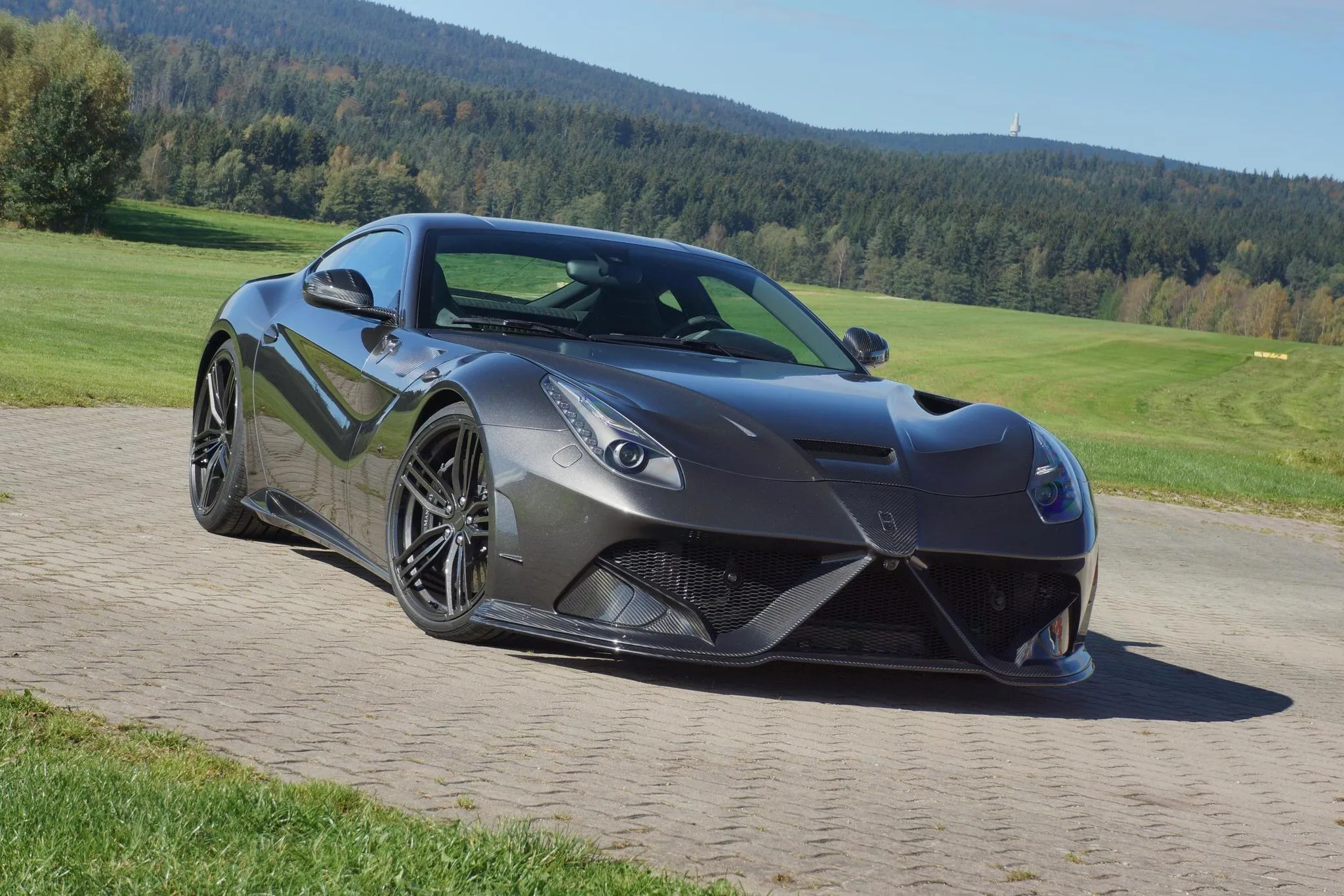
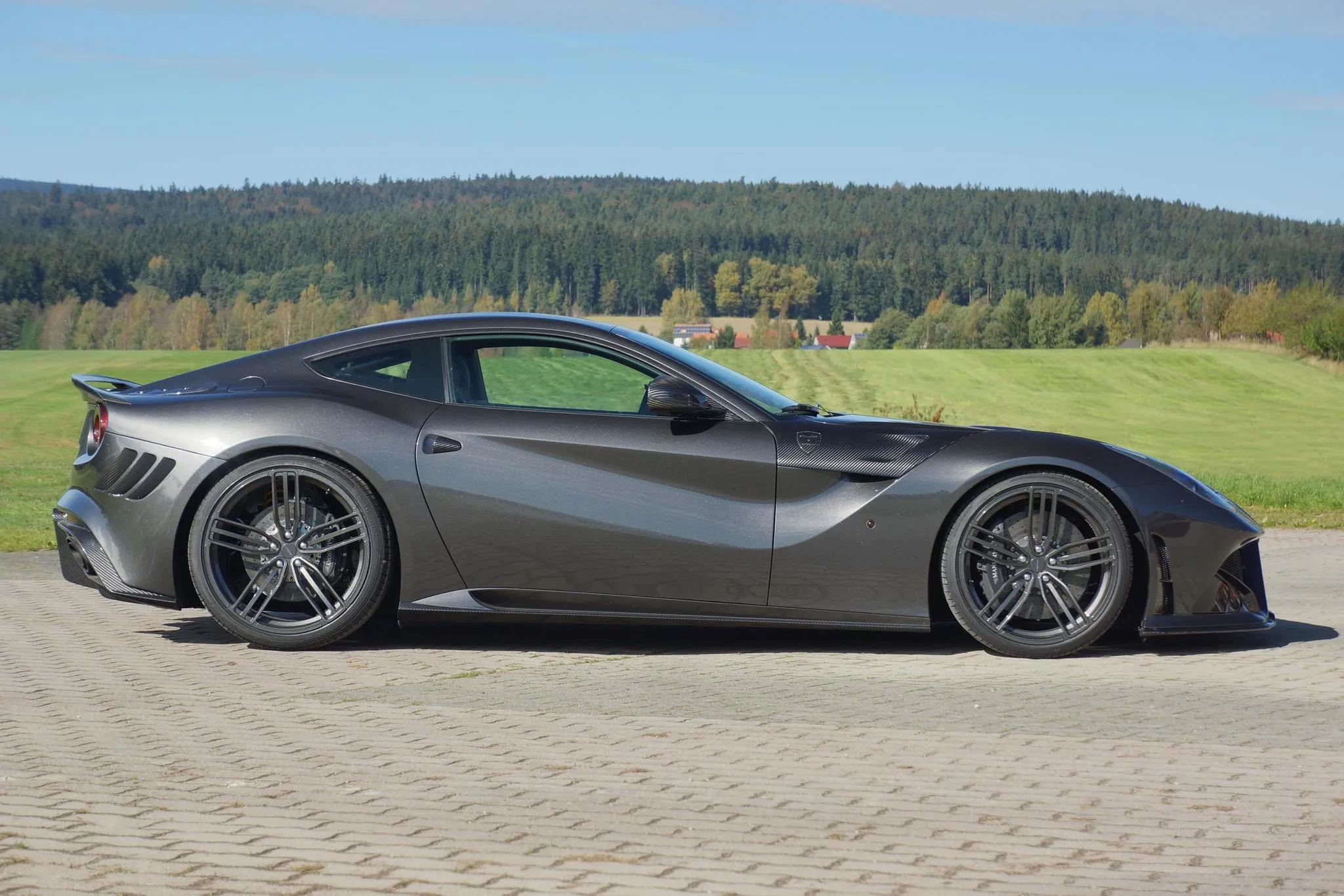
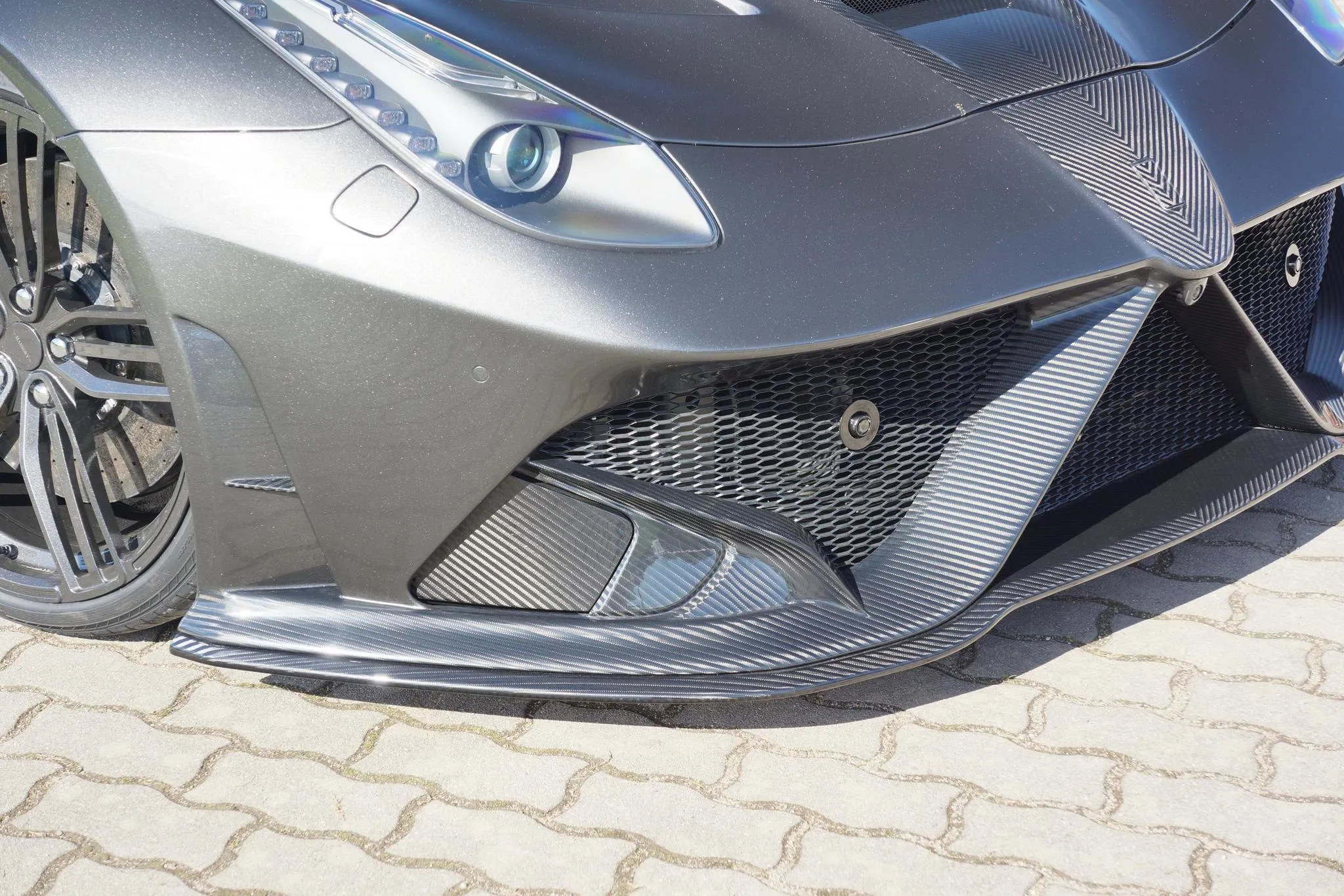
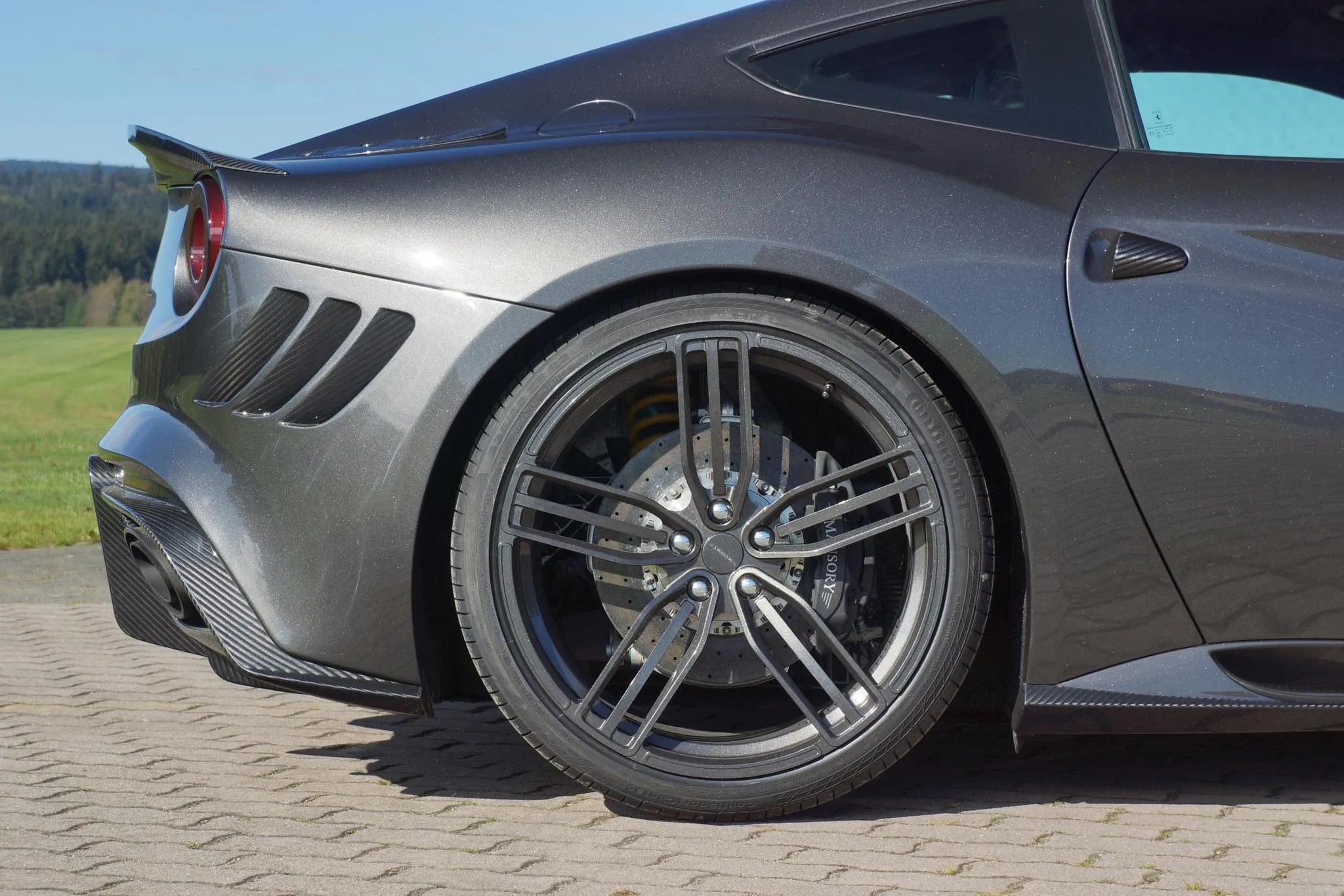
Mansory Carbon Fiber Body kit set for Ferrari F12berlinetta


MANSORY STALLONE for the FERRARI F12 BERLINETTA — the Middle Chapter of the Stallone V12 GT Line, Sized to a 740 hp Direct-Injection F140 FC and Ferrari's First V12 Dual-Clutch
The Ferrari F12berlinetta is the V12 Ferrari that made the 599 instantly look slow without making the 812 feel necessary. Launched in 2012 to replace the 599 GTB Fiorano and retired in 2017 in favour of the 812 Superfast, the F12 sits between them as a five-year window — long enough to develop a personality, short enough that it has never quite been canonised the way its bookends have. Mansory's Stallone programme runs across all three of these front-engined V12 GTs: the original Stallone was launched on the 599, this F12 entry is the middle chapter, and the Stallone V2 for the 812 is the current generation. This page covers what is specifically F12 about the F12 commission — chassis, F140 FC engine variant, the transmission switch to dual-clutch — without re-running the 599 narrative that already sits on the 599 Stallone page.
F12 in the Ferrari V12 GT lineage — between 599 and 812
The F12 is the second of three modern Ferrari V12 GTs sharing a common front-mid-engine architectural philosophy. The 599 GTB Fiorano (2006-2012) opened the era with the F140 6.0 L NA V12 in 620 hp form and a 6-speed F1 SuperFast single-clutch automated manual. The F12berlinetta (2012-2017) replaced it with a more compact body, the new F140 FC 6.3 L direct-injection V12 in 740 hp form, and — and this is the F12's defining mechanical event — the first 7-speed dual-clutch transaxle ever fitted to a Ferrari V12 GT. The 812 Superfast (2017-2022) then took the F140 family to 6.5 L and 800 cv with the same dual-clutch architecture. The F12 is therefore the car that did the hard part: it carried Ferrari's V12 GT line across the manual-to-DCT and port-to-direct-injection transitions in a single model generation. By the time the 812 arrived, the architectural arguments had already been settled on the F12. Mansory's three Stallone chapters mirror this lineage exactly, and the F12 commission deliberately reads as the middle entry rather than as either of the other two.
Stallone evolution — F12 specifics vs the 599 entry
The F12 Stallone shares the Stallone naming and the Mansory front-engined V12 design language with the 599 entry, but the panel set is sized to the F12's geometry, not the 599's. The F12 is shorter (4 618 mm vs the 599's 4 665 mm), wider (1 942 mm vs 1 910 mm), and runs a 30 mm shorter wheelbase (2 720 mm vs 2 750 mm); the front overhang is dramatically reduced and the cabin is pushed rearward, which means the F12 wears Stallone with a more compact, more mid-engined-looking stance than the 599 ever could. The other F12-specific design driver is the factory aero bridge — a channel cut between the bonnet and the front fender that routes high-pressure air over and out of the front wheel arches; Mansory's F12 carbon front fenders are shaped around that bridge rather than blanking it off, which is the single biggest visible difference between the F12 Stallone fender geometry and the 599's. Lower-body changes follow from the wheelbase: the F12 side skirts are shorter and the rear diffuser sits closer to the rear axle, giving the F12 a more tucked-up rear three-quarter than the long-tailed 599. If you are choosing between the two on collector grounds, the 599 Stallone reads as a GT; the F12 Stallone reads as a sports-coupe with a V12 in the front.
Carbon kit components
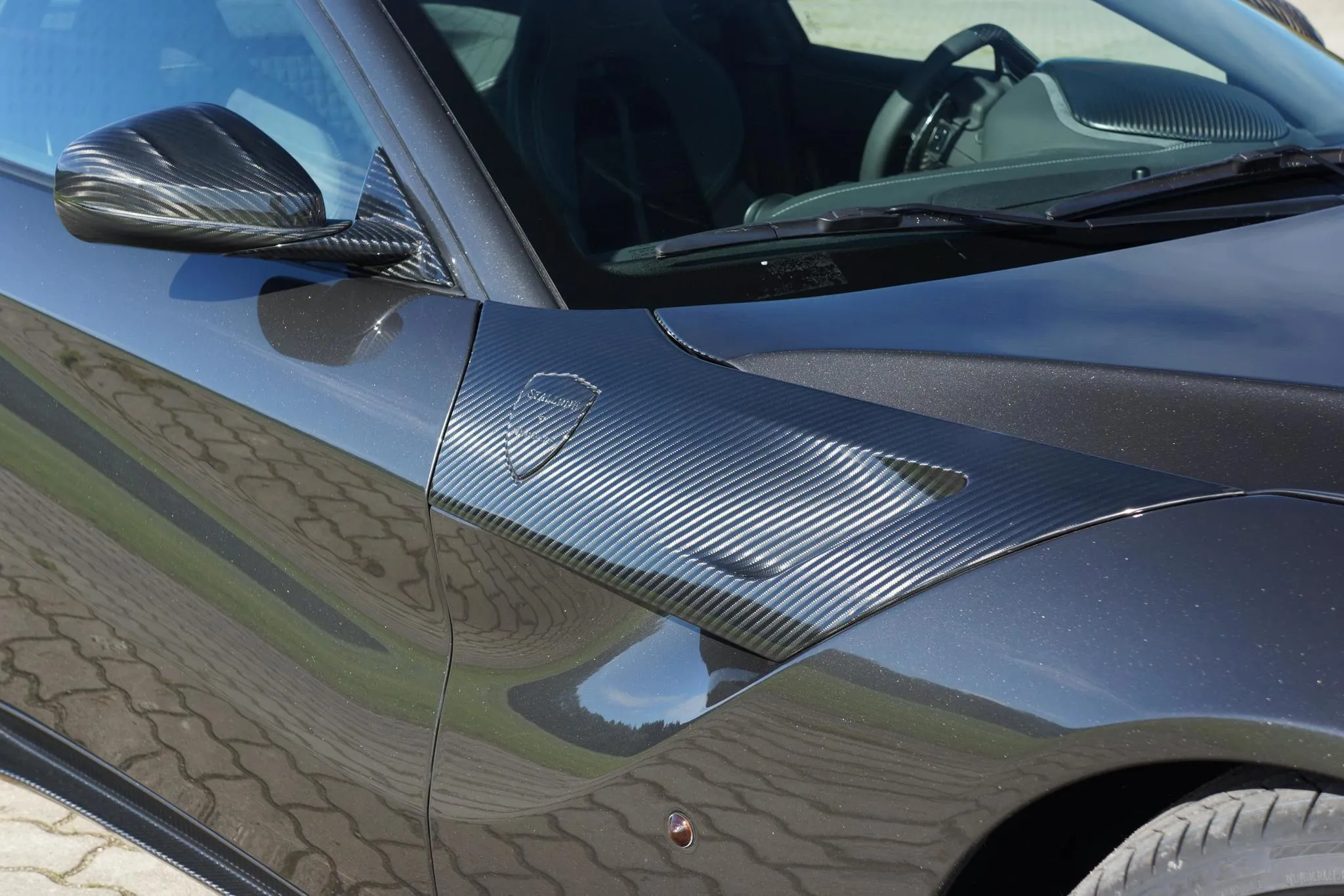
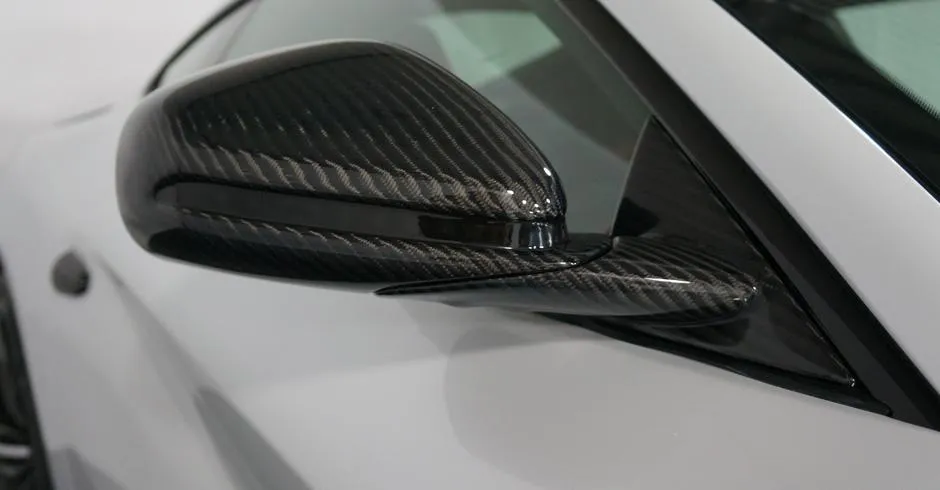
F12 Stallone schedule: front kit with replacement carbon front bumper, deeper splitter and reshaped lower intakes; front add-on lip as a softer alternative to the full bumper swap; front add-on panel for the centre-bonnet area; head-lamp covers in carbon; air-outtake panels shaped around the F12's factory aero bridge; front fender trims sized to the aero-bridge geometry; side skirts tuned to the F12's 2 720 mm wheelbase; door-handle covers; mirror masks; rear kit with replacement carbon rear bumper and integrated diffuser; rear add-on diffuser as a partial-swap alternative; rear-lamp covers; rear decklid spoiler tuned to the F12's high-speed rear-axle balance; engine-cover middle section in carbon; airbox cover in carbon for the F140 FC intake; engine-compartment cover trim for the visible bay panels. Most components are supplied as autoclave-cured forged carbon with the signature Mansory raw-weave finish under primer; FRP equivalents are available for any panel where the client prefers full body-colour paint.
F140 FC 6.3 V12 — the direct-injection update
The F12's drivetrain is the single biggest change between the 599 and the 812. The F140 FC 6.3 L 65° naturally aspirated V12 evolves the 599's F140 family by adding direct injection, raising displacement from 6.0 L to 6.3 L and reworking the heads, intake and exhaust to deliver 740 hp at 8 250 rpm and 690 Nm at 6 000 rpm. Compression ratio: 13.5:1. Specific output: 117 hp per litre. The transmission is the F12's other landmark: a 7-speed F1 dual-clutch transaxle, the first DCT ever fitted to a V12 Ferrari (the 599's F1 SuperFast was a single-clutch automated manual). CCM3 carbon-ceramic brakes are standard. 0-100 km/h: 3.1 s. Top speed: 340 km/h. Mansory's Stallone front bumper and bonnet louvres are sized for the F140 FC's higher cooling demand vs the 599's F140 — the radiator pack on the F12 is larger, and the Stallone front intake geometry reflects that. Variants: standard F12 Berlinetta (2012-2017, ~9 000 cars) and the F12 TdF (2015 limited 799 units, 780 hp, lighter body, four-wheel-steering). Stallone bolts to a standard F12 donor without modification; F12 TdF fitment is a separate sub-commission because the TdF's rear haunches and bonnet louvre layout differ from the standard car.
Wheels — 21" forged for the F12
Factory F12 Berlinetta fitment: 20" front / 20" rear staggered. Mansory F12 Stallone fitment: FM split-rim forged 21" front / 21" rear staggered. Tyre fitment: 275/30 R21 front + 315/30 R21 rear. The FM pattern is Mansory's classical split-rim five-spoke design with a centre-bolted outer rim — chosen on the F12 because the car's compact-yet-front-engined proportions sit better on a traditional split-rim five-spoke than on a deep-concave monoblock. The 21" sizing keeps the tyre sidewall tall enough to preserve F12 ride quality on European B-roads while giving the car a meaningful step up from the factory 20" diameter. Finishes: polished outer with painted centre (body-colour, matte-black, gunmetal or Rosso Corsa), full matte-black, full polished, or two-tone bronze-on-black. Centre-lock conversion is not available for the F12 (the F12 retains a traditional 5-bolt pattern; centre-lock fitments are reserved for Ferrari mid-engine programmes). Catalogue: hodoor.world/collection/forgedwheels.
Stallone clientele in 2026
This is the only batch-17 card using a real HTML table — F12 clientele rendered as a small three-row matrix for visual variety against the prose and bullet formats used elsewhere.
| Region | Typical commission |
| Switzerland | Geneva-area F12 GT specialists, low-mileage cars from the CH/Monaco corridor |
| Hong Kong / Macau | F12 collector commissions, often paired with a 599 GTB or 812 Superfast in the same garage |
| United States | Late-import F12 owners (some grey-market 2013 cars), Stallone fitted post-Show-or-Display certification |
Commission
Commission requires: F12berlinetta VIN (standard Berlinetta vs F12 TdF clearly specified), current paint and interior trim codes, carbon scope (full kit vs add-on lip-and-diffuser route), FM 21" wheel finish specification, optional interior retrim, destination country. Typical lead times: 12-14 weeks carbon, 8-10 weeks wheels, 2 weeks installation at a Ferrari-experienced workshop, +3 weeks if interior retrim is part of the commission. A full F12 Stallone commission typically lands in the four-month window. Direct contact for F12-specific quotes: [email protected] or WhatsApp +44 7488 818747. Quotes returned with VIN-checked panel availability and landed-cost figures for the destination country within two working days.
Where this Stallone Kit Ferrari F12berlinetta programme is most ordered today
Most Mansory Stallone Kit Ferrari F12berlinetta commissions in 2026 originate from the same set of markets. In Asia, the kit is most often commissioned by collectors based in Singapore and Japan. Mediterranean demand — Greece, Cyprus — clusters around coastal collector communities. The Gulf cluster — anchored by Bahrain and Qatar — accounts for a meaningful share of Stallone Kit Ferrari F12berlinetta orders. Insured shipping with full customs paperwork is included on every Stallone Kit Ferrari F12berlinetta order, regardless of destination.
FAQ — F12 Stallone, model-specific
Will Stallone fit the F12 TdF? The Tour de France's bodywork differs from the standard F12 Berlinetta in several places — the rear haunches are wider, the bonnet louvre layout differs, the front splitter is integrated rather than bolted on, and the four-wheel-steering rear subframe affects rear-bumper packaging. Stallone front-add-on, side-skirt and mirror panels interchange onto a TdF donor; the full front bumper, rear bumper and rear-spoiler items need to be quoted as a TdF-specific sub-commission rather than a standard catalogue fit.
Does Stallone preserve the F12's factory aero bridge? Yes. The aero bridge — the channel between the bonnet and the front fender that routes high-pressure air over and out of the front wheel arches — is preserved in the Stallone front-fender geometry. The carbon fender trims are shaped around the bridge rather than blanking it off. This is one of the key F12-specific engineering points of the kit.
Is the F12's 7-speed F1 dual-clutch transaxle a wear concern with Stallone fitted? Stallone is a cosmetic carbon programme and does not raise engine output, so the dual-clutch transaxle wear profile is unchanged from a stock F12. The F12 DCT is a long-life unit relative to the 599's F1 SuperFast single-clutch — most F12 transaxles run 60 000-80 000 km between major services in normal use. Mansory recommendation is the same for any F12 commission, kit or no kit: have the DCT fluid and clutch-pack condition checked before any new commission begins.
What about the F140 FC engine — does Stallone come with a tune? A reflash adding ~30 hp on top of the factory 740 hp, plus optional Mansory exhaust hardware, is available as a separate engine-side commission. It is not part of this body-kit programme. Most F12 Stallone clients leave the F140 FC at factory output — the 740 hp NA V12 already does enough work without additional intervention.
Can the kit be installed on a 599 or an 812? No — the Stallone family runs three separate model-specific programmes (599, F12, 812). Panel geometry, wheelbase and aero-bridge details are different on each car. The 599 Stallone and the 812 Stallone V2 are documented separately.